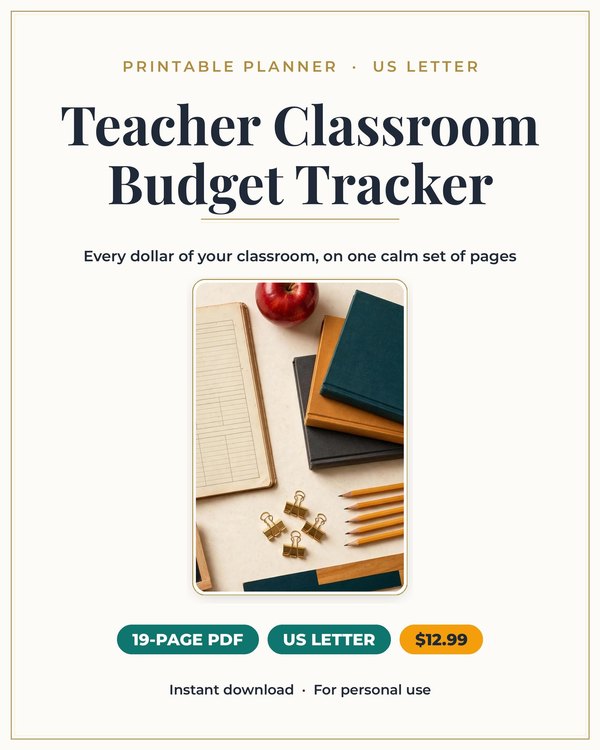
Teacher Classroom Budget Planner
The finance planner built for teachers who spend their own money on their classrooms.
$3.25 $12.99
Buy on Etsy →
Business and Side Hustles
The money side of your one person business in one calm system.
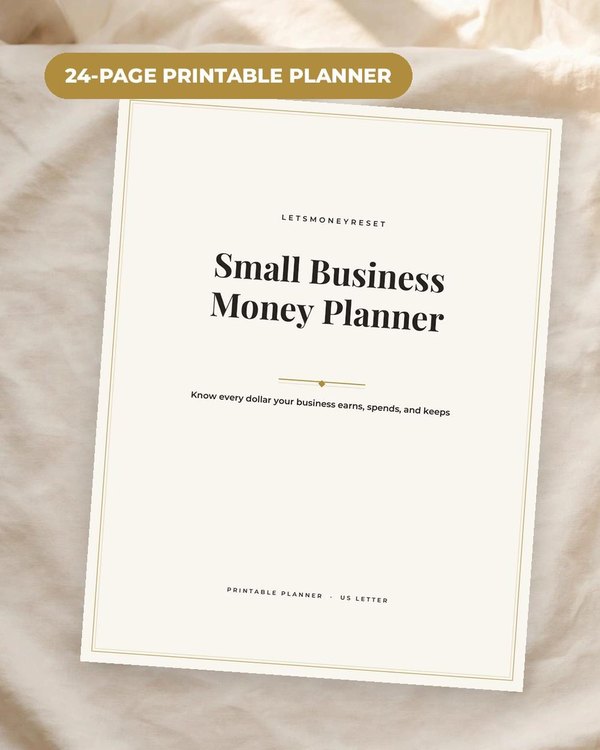
Running a one person business means you are the CEO, the bookkeeper, and the collections department. The money side usually gets whatever attention is left over, which is none. This 24 page printable planner gives the money side its own system: set revenue targets, price your work honestly, log every dollar in and out, and close the books every month like a business that plans to survive.
It opens with a clearly labeled worked example so you can see how every page is meant to be used, then every tracker is blank and ready for your numbers. This is not accounting software and it is not trying to be. It is the paper system that keeps a small business honest between tax seasons.
Most solo business owners underprice. They set rates by feel, forget to count the unpaid hours, and wonder why the business never quite pays them. The revenue target and pricing pages force the real math: what you want to earn, what it costs to run the business, and what your prices need to be to cover both.
This is the page to do before you take on the next client or raise your rates. When your prices are built on actual numbers instead of guesses, quoting gets easier and the business gets healthier. Honest pricing is the foundation everything else in the planner stands on.
The business income and expense ledger is the daily habit: every dollar in, every dollar out, recorded the day it moves. The vehicle mileage log sits beside it for the driving most small businesses forget to track. Log the miles the day you drive them, because reconstructing a year of trips in April is how deductions get left on the table.
The invoice and payment tracker is your collections department. Every invoice goes in with its due date, and the tracker shows at a glance who has paid and who needs a nudge. Chasing invoices on a schedule instead of when you remember turns awkward follow ups into routine, and routine gets you paid faster.
Nothing blindsides a new business owner like the first quarterly tax bill. The quarterly tax set aside worksheet fixes that by making tax savings a habit instead of a scramble. Each quarter you set aside a portion of profit before you spend it, so the payment is already sitting there when it comes due.
At year end, the annual review and tax time summary pulls the whole year together on one clean page: total income, total expenses, mileage totals, and the numbers your tax pro actually asks for. Hand that page over instead of a shoebox of receipts and watch your accountant's face change.
The default for solo owners is to pay every bill, reinvest whatever is left, and take home the scraps. The profit first allocation sheet reverses that. Each time money comes in, you split it by percentages you set: profit first, then your pay, then taxes, then operating expenses. What is left is what the business runs on.
This feels backwards the first time and obvious the second. A business that cannot pay its owner is a hobby with overhead. The allocation sheet makes paying yourself a system instead of a wish, and the monthly close checklist keeps the whole routine running: reconcile, review, allocate, repeat.
This planner is for freelancers, sole proprietors, and one person service businesses: designers, writers, cleaners, consultants, coaches, tradespeople, resellers. If your business is you plus maybe a part time helper, and your bookkeeping is currently a mix of bank statements and hope, this is your system.
It is not for businesses with employees, inventory, or complex structures. Those need real accounting software and probably an accountant. This planner is for the stage before that, or for the simple business that will never need more than clean records and good habits.
Download and print the planner. Read the worked example first to see how each page works.
Set your revenue targets and pricing, then log income, expenses, mileage, and invoices as they happen.
Each month, run the close checklist. Each quarter, set aside your taxes. At year end, hand your tax pro the summary page.
What buyers ask before downloading this planner.
No. This is an organizational tool only, not tax, financial, or legal advice. It helps you keep clean records. For advice about your specific situation, talk to a tax professional.
For a simple one person business, it can. If you have employees, inventory, or complex needs, you will outgrow paper. Many owners use this planner daily and hand the summary to their accountant at tax time.
A method where you allocate a percentage of every deposit to profit before paying expenses, instead of treating profit as whatever is left over. The allocation sheet in this planner walks you through setting your percentages.
Log each business trip the day you drive it: date, destination, purpose, and miles. The mileage log has columns for all of it. Consistent daily logging is what makes the deduction defensible.
If you are a single member LLC taxed as a sole proprietor with simple books, yes. The planner is built for one person businesses regardless of the legal structure.
It is a printable PDF. Print the ledger and log pages in bulk since you will use them most. You can also fill it in on a tablet with a stylus.
Planners from the same collection, built to work together.
The finance planner built for teachers who spend their own money on their classrooms.


Know your real profit per show, not just what sold.
Join the list and get the free monthly budget worksheet plus first word on new planners.
No spam, ever. Unsubscribe anytime.