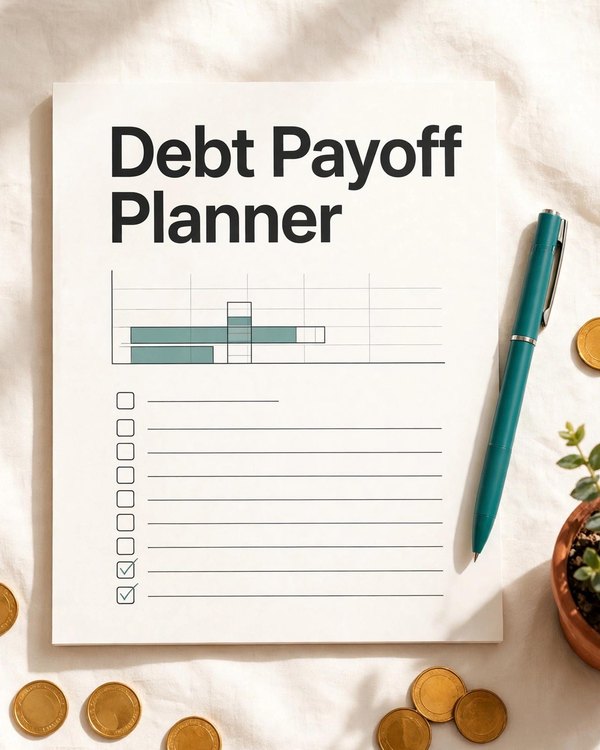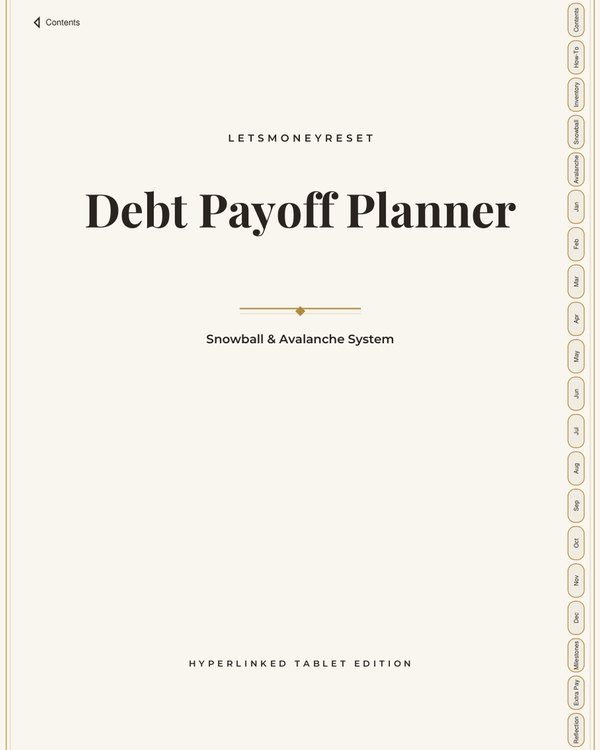
Debt Payoff Planner Bundle
$3.75 $14.99
Become debt free with one complete printable system.
Buy on Etsy See detailsShop by need
Snowball and avalanche planners plus bundles that turn balances into a finish date.
This collection exists for one reason: getting you out of debt with a written plan instead of a wish. Every product here attacks the same problem from a different angle. The Debt Payoff Planner is the core printable system: debt inventory, snowball and avalanche ranking worksheets, twelve monthly trackers, milestone pages, and an interest saved calculator. It is the plan on paper.
Around it sit the supporting tools. The Debt Free Bundle combines the payoff planner with the Sinking Funds Tracker and the Savings Challenge Bundle, because getting out of debt and staying out are two different jobs. The hyperlinked iPad version brings the same planner to GoodNotes and Notability for stylus users. Pick the format that fits your life; the method inside is the same.
The collection also respects that debt payoff is emotional, not just mathematical. The milestone pages, the visual progress, the interest saved calculator: every piece is designed to keep you going through the long middle where the novelty wears off and the balances still feel big. Motivation is treated as a feature, not a footnote.
The two great debates of debt payoff. The snowball method pays your smallest balance first, giving you a quick win that fuels motivation. The avalanche method pays your highest interest rate first, which costs less in total interest. Financially, avalanche wins. Psychologically, snowball often wins. The research on this is genuinely mixed because humans are not spreadsheets.
The planners in this collection refuse to choose for you. The ranking worksheets lay out your payoff order under both methods side by side, using your actual debts and rates. You see the tradeoff in real numbers and pick the order you will actually follow. The method you stick with beats the method that is theoretically optimal.
A payoff plan only works if you look at it. The twelve monthly trackers in the core planner make that a ritual: each month you log what you paid, update every balance, and watch the debts shrink. It takes a few minutes and it is the difference between a plan and a fantasy.
The milestone pages exist because debt payoff is a long game and long games need markers. First debt gone. Halfway there. Interest saved crossing four figures. Marking these moments on paper gives your brain the proof of progress it needs to keep going through the boring middle months.
If you fall off the plan, the trackers make it easy to restart. There is no streak to break and no app judging your gap. You pick up at the current month, enter the current balances, and keep going. The planner assumes real life happens, which is why it still works after a bad month.
If you want the complete system in one download, the Debt Free Bundle is the pick: three planners covering payoff, sinking funds for irregular expenses, and savings challenges, 49 pages total. Sinking funds deserve emphasis here, because the car repair that goes on a credit card is how paid off debt comes back. The bundle treats prevention as part of the payoff.
Format wise, you have three options. The printable PDF for paper people who want the plan on the fridge or in a binder. The hyperlinked iPad version for GoodNotes and Notability users who want tap to navigate pages with a stylus. Both contain the same payoff method. Choose the one you will actually open every month, because the best format is the one that survives contact with real life.
Become debt free with one complete printable system.
Buy on Etsy See detailsPay off debt faster with a written plan, not a wish.
Buy on Etsy See detailsYour debt payoff plan, made for your iPad.
Buy on Etsy See detailsThe planners shoppers in this collection open first.
Our free money tools cover appeals, school plans, and fertility costs.
See free toolsWhat buyers ask before choosing a debt payoff planner.
The planners include ranking worksheets for both, so you can compare them with your real numbers before deciding. Snowball pays smallest balances first for fast motivational wins. Avalanche pays highest rates first and costs less overall. Pick the order you will actually follow; consistency matters more than the method.
It depends on your balances, rates, and monthly payments. The interest saved calculator in the core planner shows your timeline and what extra payments do to it. Most people are surprised how much an extra hundred or two a month shortens the road.
The printable is the core system on paper. The Debt Payoff Spreadsheet, in the budget planners collection, calculates both payoff plans automatically with month by month engines. The hyperlinked iPad version is the printable adapted for GoodNotes and Notability. Same method, three formats.
Yes. Student loans go in the debt inventory like any other debt, with their balances and rates. The ranking worksheets handle them the same way, though federal loans with special programs deserve a separate look before you accelerate payments on them.
No. These are organizational tools for tracking and planning your own payoff strategy. They do not tell you which debts to pay first and they are not investment, tax, or legal advice.
One page, ten minutes, your whole month on paper. Join the list and we will send it to you.
No spam, ever. Unsubscribe anytime.