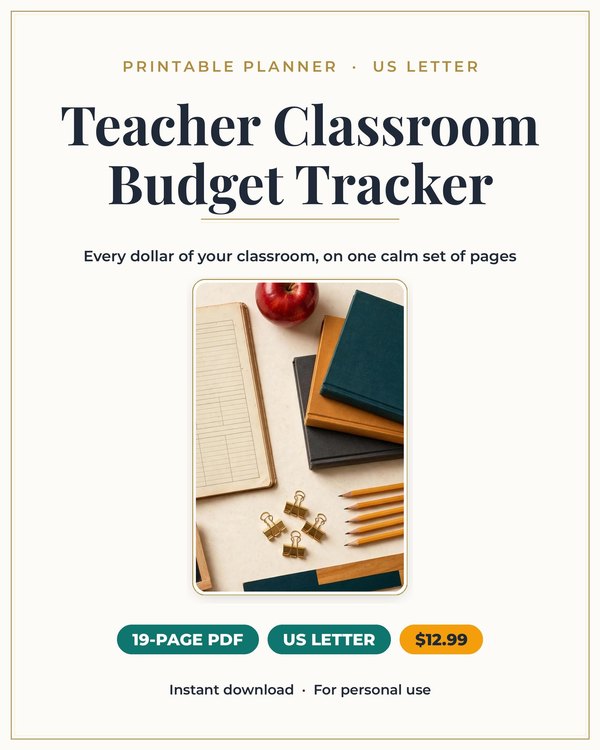
Teacher Classroom Budget Planner
The finance planner built for teachers who spend their own money on their classrooms.
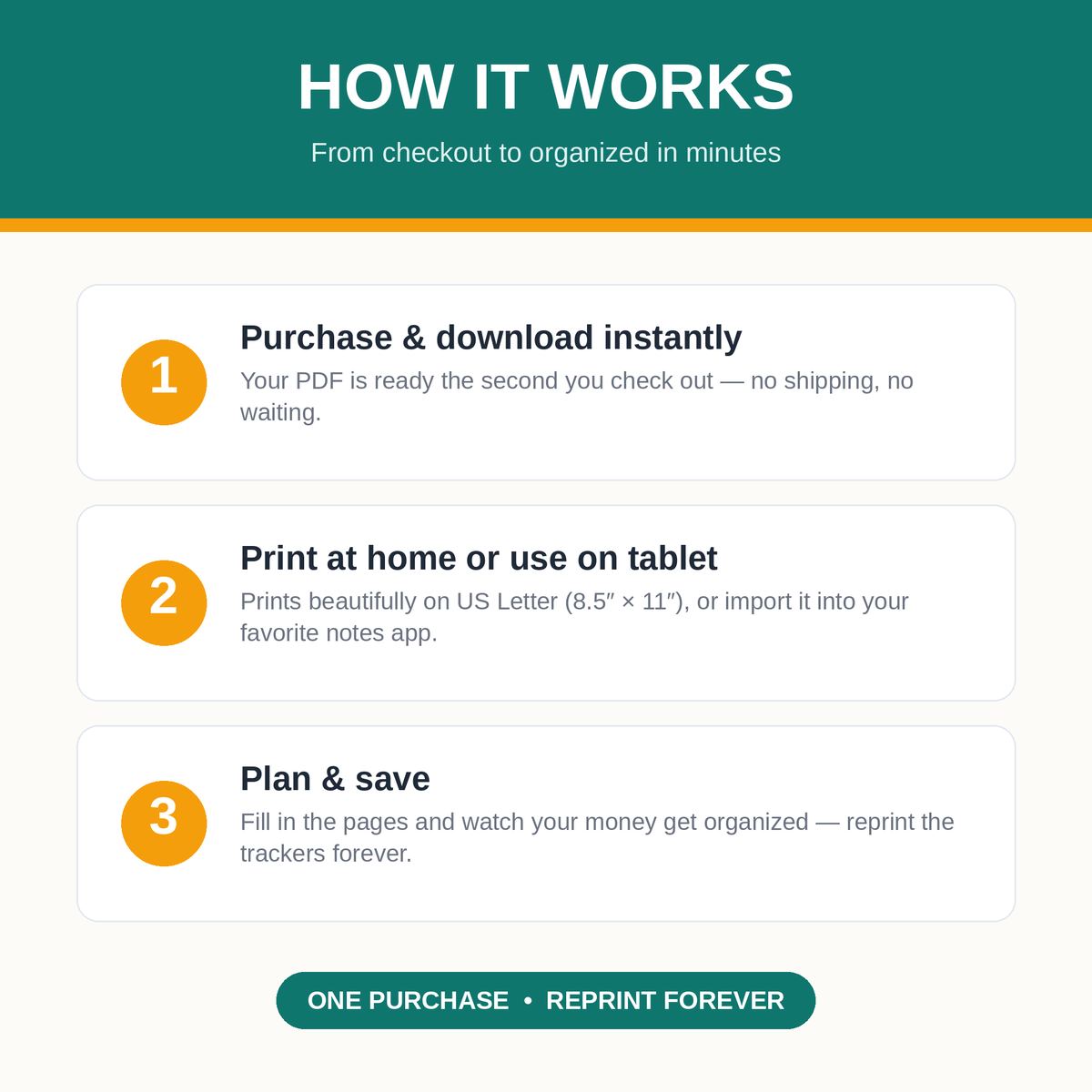
$3.25 $12.99
Buy on Etsy →


Business and Side Hustles
Turn your spare hours into real profit.
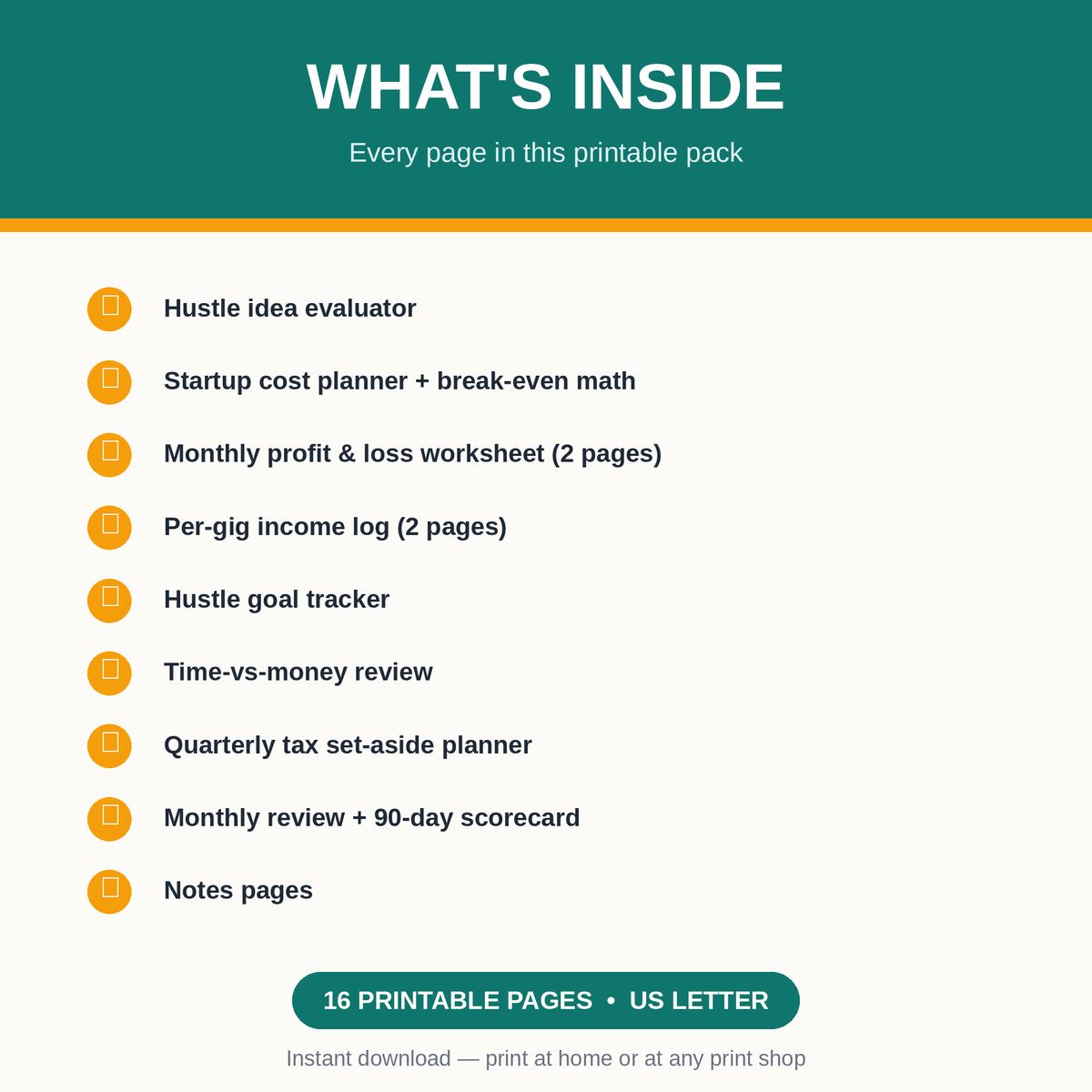
This 16 page printable tracker takes you from thinking about a side hustle to knowing exactly what you earn, what you keep, and whether it is worth your time. Most side hustles run on a vague feeling of doing okay. This replaces the feeling with numbers.
It covers the whole arc: picking the right hustle, planning what it costs to start, tracking income gig by gig, running a monthly profit and loss, and scoring each 90 day stretch so you can see whether the hustle is growing or just busy.
You start with the hustle idea evaluator, which scores up to 6 ideas on startup cost, time required, skill fit, and income potential. That page alone saves people from pouring months into the wrong hustle. Then the startup cost planner maps what you need to spend before the first dollar comes in, with break even math showing how many sales or gigs pay it back.
The ongoing pages are the per gig income log, the monthly profit and loss worksheet, the hustle goal tracker, and the 90 day scorecard that pulls each quarter into one honest review.
This is for anyone earning money outside a day job, or thinking about it. Freelancers, resellers, craft sellers, drivers, tutors, content creators. If money comes in irregularly and expenses blur into personal spending, you need this separation on paper.
It is also for the deciding stage. If you have three hustle ideas and no idea which to pick, the evaluator page turns that decision from gut feeling into a scored comparison.
Start with the idea evaluator. Score your options honestly, especially on time required, because time is the cost people underestimate most. Run the break even math on the winner before spending anything.
Once you are running, log every gig or sale in the per gig income log the day it happens. At month end, run the profit and loss worksheet: income minus every expense, no exceptions. Every 90 days, fill in the scorecard and ask the hard question the numbers are answering.
A side hustle without tracking is a hobby with stress. The most common failure is not that the hustle earns too little. It is that the owner never knows, so they keep feeding time and money into something that was never profitable.
The per gig log catches the truth early. When you see what each gig actually nets after costs, pricing decisions get obvious. The 90 day scorecard forces the bigger review: is this growing, flat, or a polite way to burn weekends. Knowing is always better than wondering.
Score your hustle ideas on the evaluator, then run break even math on the winner before spending a dollar.
Log every gig and expense as it happens so the numbers stay honest and current.
Close each month with the profit and loss worksheet and review every 90 days with the scorecard.
What buyers ask before downloading this planner.
Yes, the first pages are built for exactly that stage. The idea evaluator helps you pick between options, and the startup cost planner with break even math shows what each idea really costs before you commit.
It is 16 printable pages. The planning pages get used once per hustle, while the per gig log and monthly profit and loss pages get reprinted as you fill them.
Yes. Print a fresh set of tracking pages per hustle, or run them side by side in one binder. The 90 day scorecard works especially well for comparing two hustles honestly against each other.
The tracker separates your hustle income and expenses cleanly, which is exactly what you need at tax time, but it is not tax advice. Take your completed profit and loss pages to a tax professional for filing guidance.
It is a quarterly review page that pulls your income, expenses, hours, and goals into one view. Ninety days is long enough to see real trends and short enough to change course, which makes it the right rhythm for deciding whether a hustle deserves more effort or a graceful exit.
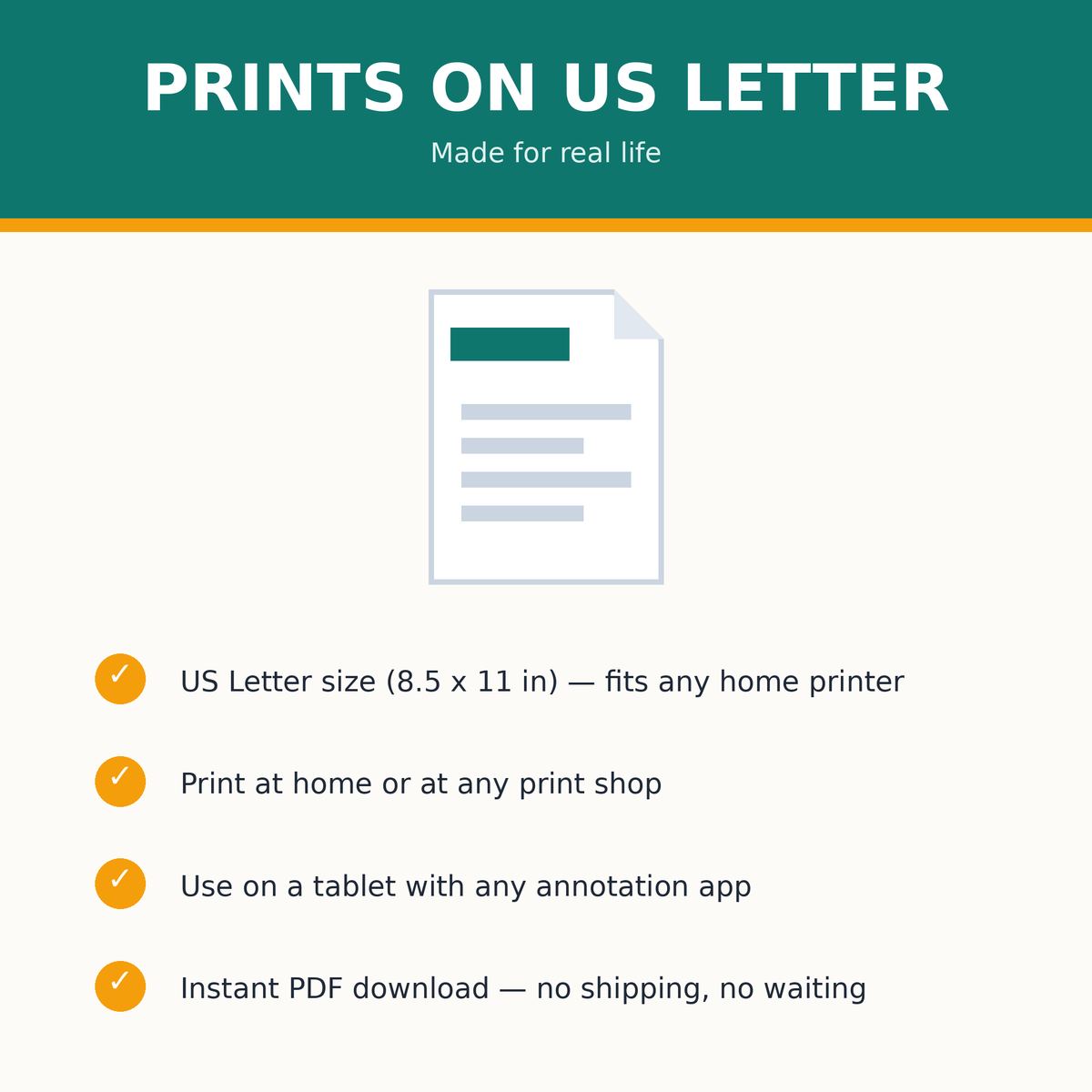
It prints on US Letter paper. Use 100 percent scale in your print dialog for the intended layout.
Planners from the same collection, built to work together.
The finance planner built for teachers who spend their own money on their classrooms.
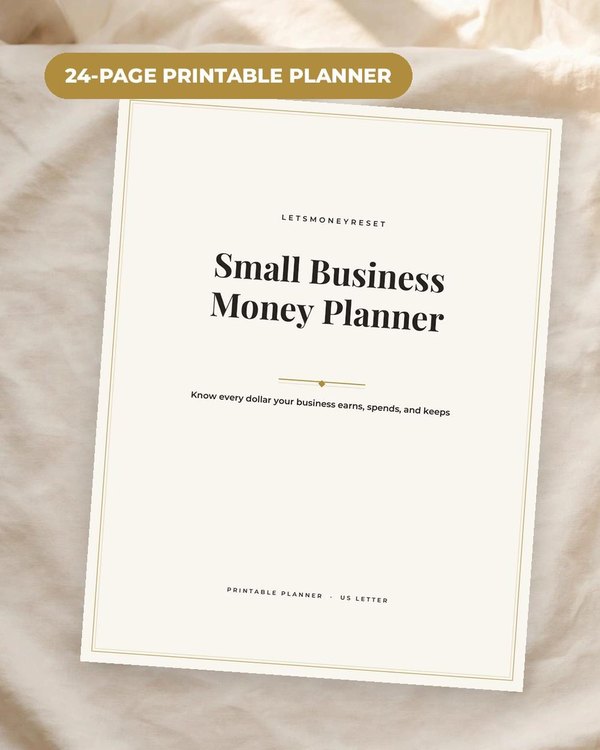
The money side of your one person business in one calm system.

Join the list and get the free monthly budget worksheet plus first word on new planners.
No spam, ever. Unsubscribe anytime.