Teacher Classroom Budget Planner
The finance planner built for teachers who spend their own money on their classrooms.
$3.25 $12.99
Buy on Etsy →
Business and Side Hustles
Run your cottage bakery like a business, not a sticky note pile.
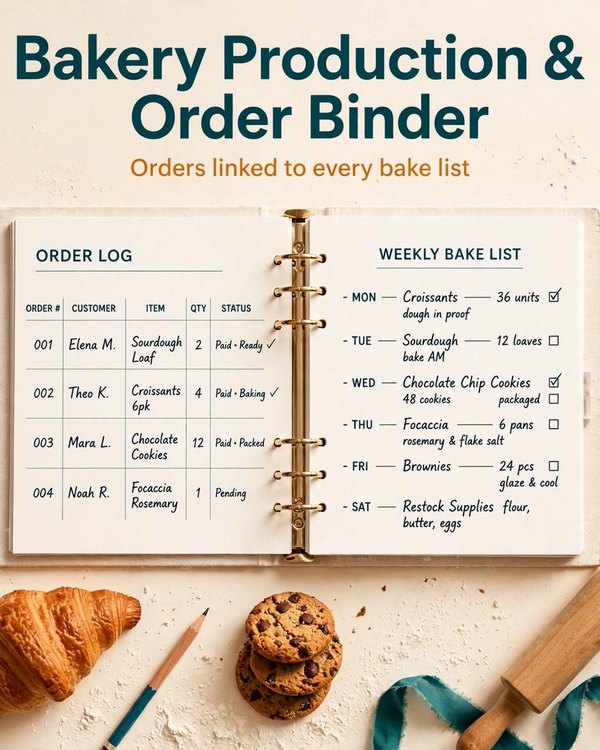
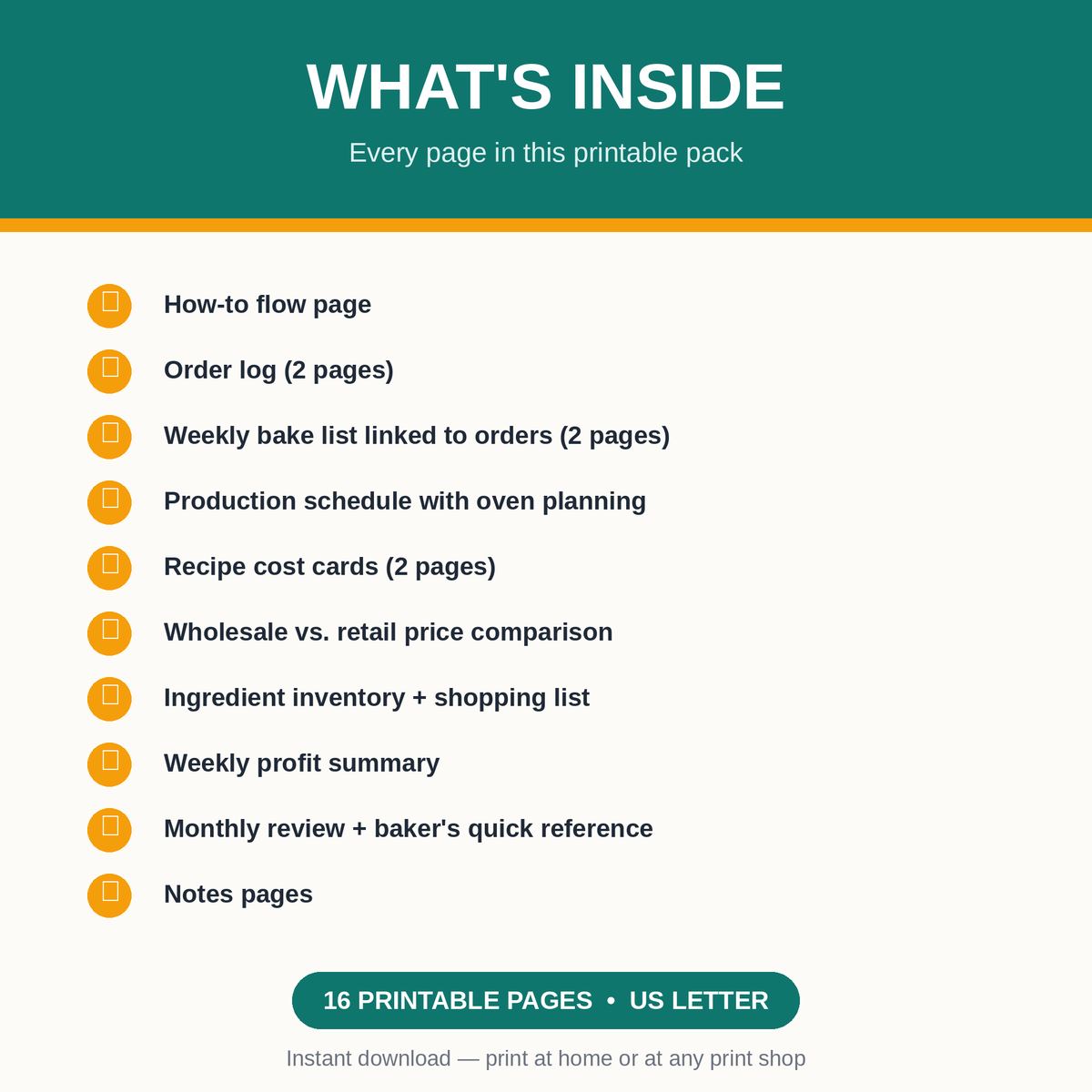
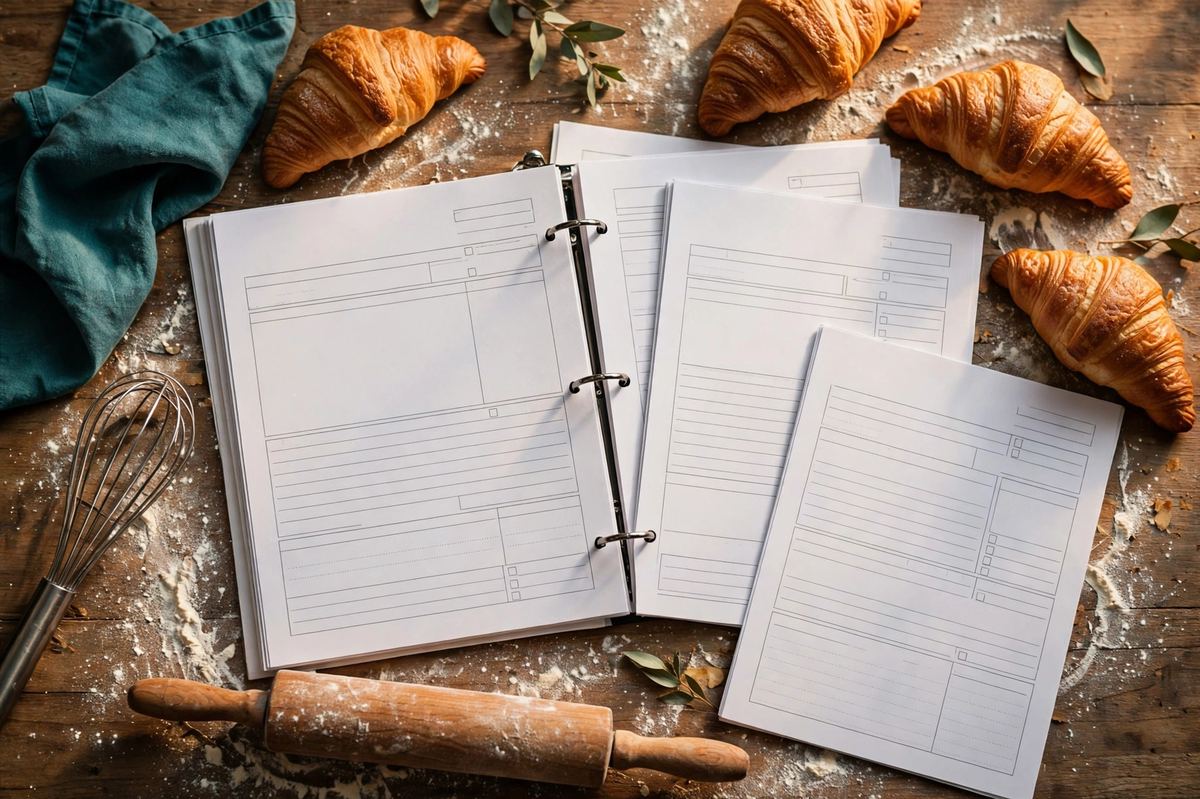
This is a 16 page printable binder that links every order to its bake. Home bakeries usually start with talent and grow into chaos: orders on sticky notes, costs guessed at, pricing set by feel. This binder replaces all of that with a simple paper system.
The order log captures deposits, balances, and pickup dates. The weekly bake list groups orders by product and oven run, with the exact order numbers each batch serves. Recipe cost cards and a wholesale versus retail sheet make sure every price actually makes money.
The order log is the front door: customer, product, quantity, deposit, balance, pickup date. Every order gets a number, and that number follows the order through the whole binder. The weekly bake list then groups those orders by product and oven run, so you can see at a glance what each batch is serving.
The money pages are where bakeries usually leak profit. Recipe cost cards break each recipe into ingredient costs so you know your true cost per item. The wholesale versus retail sheet prices both channels honestly. A production schedule, inventory tracker, and weekly profit summary close the loop from order to money in the bank.
This is for cottage food bakers selling from home under their state's cottage food law: custom cakes, cookies, sourdough, cupcakes, farmers market tables. If you take orders and bake to fill them, this is your system.
It is also for bakers thinking about wholesale. The wholesale versus retail sheet exists because those are two different businesses with two different price structures, and guessing at wholesale pricing is how bakers end up working for free.
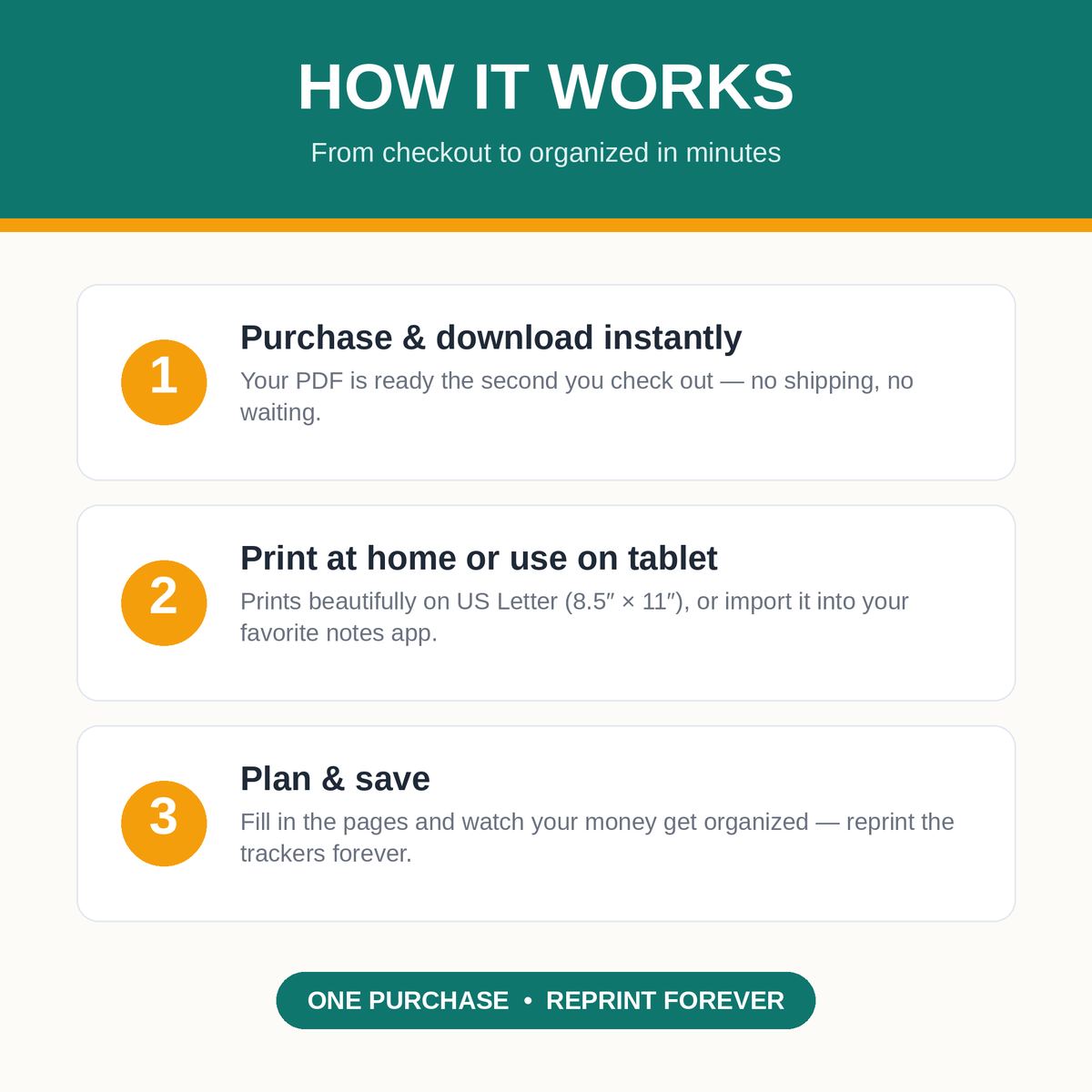
When an order comes in, log it with its order number, deposit, balance, and pickup date. At the start of the bake week, build the weekly bake list by grouping orders by product, then plan your oven runs around those groups with the production schedule.
After the week's bakes, run the inventory tracker and the weekly profit summary. Over a few weeks the recipe cost cards will show you exactly which products earn their oven time and which ones need a price change.
Most home bakers underprice. They remember the flour cost and forget the butter, the packaging, the market fees, and their own time. Recipe cost cards force the full accounting, ingredient by ingredient, and the answer is often uncomfortable. Uncomfortable is better than unknowing.
The order number system matters too. When every batch on the bake list ties back to specific orders with deposits recorded, nothing gets baked for free and nothing gets forgotten. That is the difference between a bakery and a sticky note pile.
Log every incoming order with its number, deposit, balance, and pickup date.
Build the weekly bake list by grouping orders by product, then schedule oven runs with the production schedule.
Cost each recipe on the cards, check pricing on the wholesale versus retail sheet, and close the week with the profit summary.
What buyers ask before downloading this planner.
A cottage bakery is a home based food business operating under a state's cottage food law, which lets you sell certain low risk foods made in your home kitchen. Rules vary by state, so check your local requirements for permits, labeling, and sales limits.
It is 16 printable pages covering orders, production, costing, pricing, inventory, and weekly profit. The order log and bake list pages get reprinted weekly as you fill them.
Yes. Log market prep as orders on the bake list, use the inventory tracker for what you bring and what sells, and the weekly profit summary captures market days alongside custom orders.
Each card breaks one recipe into its ingredients with the cost of each, giving you the true cost per item or batch. Compare that against your price on the wholesale versus retail sheet to see your real margin before you commit to a price.
Retail is what your direct customers pay. Wholesale is the lower price you offer shops or cafes that resell your goods. The sheet prices both separately because wholesale has to cover your costs at a lower price point, which only works if you know your true costs from the recipe cards.
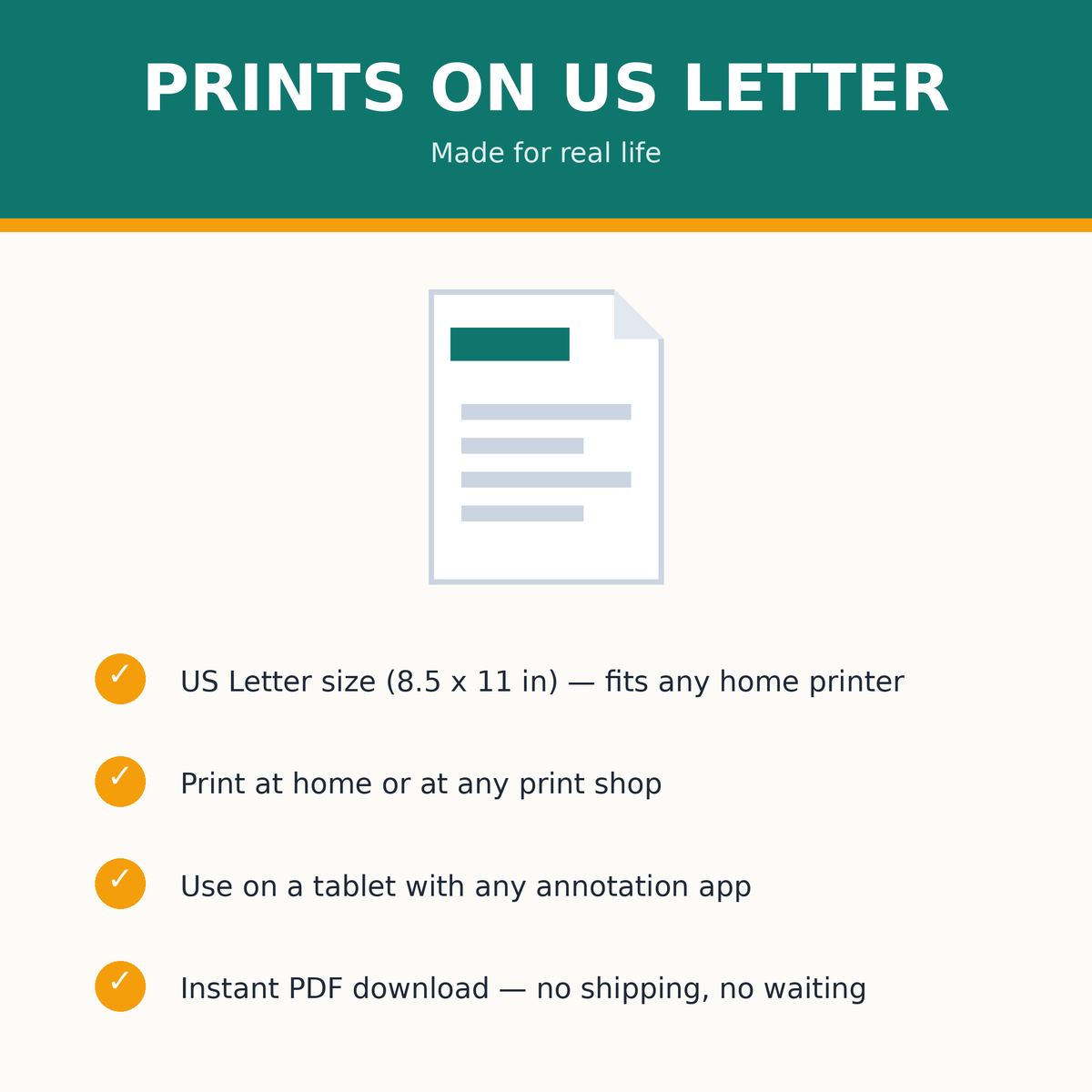
The binder pages fit US Letter paper. Print them at 100 percent so the log columns keep their spacing.
Planners from the same collection, built to work together.
The finance planner built for teachers who spend their own money on their classrooms.
The money side of your one person business in one calm system.

Join the list and get the free monthly budget worksheet plus first word on new planners.
No spam, ever. Unsubscribe anytime.