
Doctor Visit Prep Printable
Walk in with your history, meds, and questions on one page.
$2.50 $9.99
Buy on Etsy →
Health and Caregiving
Split tasks fairly, track shared expenses, keep everyone on the same page.
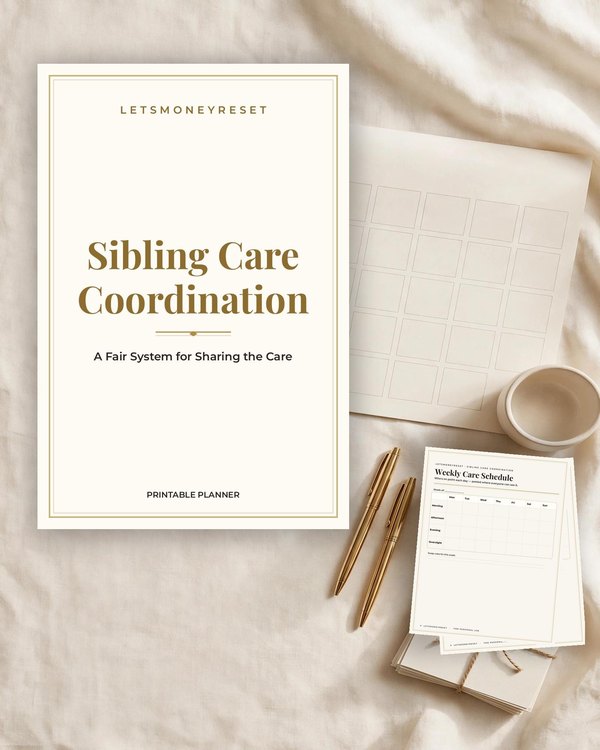
When aging parents need help, the work usually lands on whoever lives closest or speaks up first, and the resentment builds quietly from there. This 37 page printable system gives siblings a fair, written way to share elder care: who does what, who pays for what, and how decisions get made.
Inside you get a family agreement worksheet, roles and responsibilities pages, a task split planner with a weekly care schedule and monthly overview, a shared expense ledger with a monthly settlement worksheet, family meeting notes with a decision log and communication log, a care needs assessment, a respite care plan, a fairness check in, and a difficult conversations guide.
Most family care fights are not about love. They are about unclear expectations. One sibling thinks they are doing more, another thinks they are paying more, and nobody has numbers because nobody wrote anything down. A shared system replaces those stories with facts.
The family agreement is the foundation. Everyone signs off on the same roles, the same task split, and the same way of settling money. When disagreements come up later, and they will, you point to the agreement instead of relitigating the whole arrangement from scratch.
The task split planner lists the real work of caregiving: rides to appointments, medication management, grocery runs, bill paying, companionship visits, overnight coverage. You assign each task to a sibling on a weekly schedule, with a monthly overview so the load stays visible. The sibling who lives far away can take the tasks that work remotely, like managing bills and scheduling appointments, instead of defaulting to nothing.
The shared expense ledger tracks every dollar anyone spends on care: home health aides, medical supplies, home modifications, mileage. The monthly settlement worksheet does the math so each sibling pays their fair share and one person is not quietly floating the costs. Settle up monthly and money stops being a source of tension.
Family meeting notes with a decision log sound formal, and that is the point. When three siblings agree on a care plan over a group text, the details evaporate within a week. Written meeting notes with a decision log capture what was decided, who is doing what, and by when.
The communication log tracks the ongoing conversations between meetings. The difficult conversations guide helps you raise hard topics, like when a parent should stop driving or when paid help is needed, without the talk turning into a fight. And the fairness check in is a scheduled moment to ask the question nobody wants to ask: is this still fair?
It is for two to five siblings sharing care for an aging parent, whether you all live in the same town or are spread across the country. It works when one sibling has been doing everything and needs a way to ask for help that does not sound like an accusation. It works when money is already tense and you need a neutral ledger everyone can see.
It is also for the designated organizer, the sibling who naturally keeps the spreadsheets and makes the calls. This system gives that person a structure to hand to the others instead of carrying the whole mental load alone. The respite care plan is in there for them too, because the organizer burns out first.
Download and print the system, then gather the siblings for one family meeting and fill in the care needs assessment together.
Complete the family agreement: assign roles, split the task list across the weekly schedule, and agree on how shared expenses get settled each month.
Log tasks and spending as you go, hold a short family meeting monthly using the notes pages, and run the fairness check in whenever the load feels uneven.
What buyers ask before downloading this planner.
Start with what you can do alone: fill in the care needs assessment and draft a proposed task split. Presenting a concrete plan is easier for reluctant siblings to react to than an open ended request for help. The difficult conversations guide has specific language for this situation.
The family agreement lets you define fair however your family defines it: equal shares, proportional to income, or adjusted for who provides hands on care. The point is that the rule is written down and agreed to before money changes hands.
Yes. The task split planner includes remote friendly tasks like bill management, appointment scheduling, and research. The long distance sibling takes those on, and the expense ledger keeps everyone's contributions visible regardless of geography.
It is a scheduled worksheet where each sibling rates how fair the current split feels and notes what needs adjusting. Care needs change over time, so the agreement should change too. The check in makes that conversation routine instead of explosive.
No. This is an organizational system for coordinating care and money between siblings. It does not create legal authority. For powers of attorney, guardianship, or estate matters, work with an elder law attorney.
It works for two to five siblings. The worksheets have room to add more names, and the meeting and decision log format scales to whatever size your family is.
Planners from the same collection, built to work together.
Walk in with your history, meds, and questions on one page.

Show your doctor real data, and walk in believed.

Fight insurance denials with a case file, not a shoebox.
Join the list and get the free monthly budget worksheet plus first word on new planners.
No spam, ever. Unsubscribe anytime.