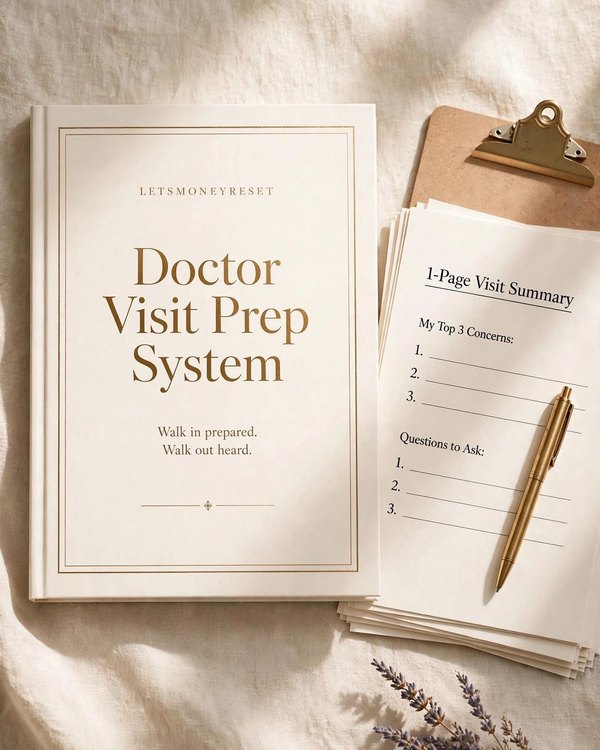
Doctor Visit Prep Printable
Walk in with your history, meds, and questions on one page.
$2.50 $9.99
Buy on Etsy →

Health and Caregiving
Show your doctor real data, and walk in believed.
POTS is hard to explain in a fifteen minute appointment. Your heart races standing up, you feel faint in line at the store, some days are fine and some days the couch wins, and by the time you sit in front of a doctor the details blur. Saying you feel dizzy a lot does not carry the same weight as a log that shows your heart rate jumping forty beats every time you stand.
This 57 page printable starter binder exists to turn what you feel into what you can show. Daily symptom trackers, a dedicated heart rate log, and weekly and monthly review pages build a record over time. Patterns emerge on paper that you would never catch from memory, and those patterns are what move a conversation with a doctor forward.
The core of the binder is the tracking system. The heart rate log gives you structured space to record readings through the day, and the daily symptom trackers capture what you felt, when, and what you were doing. Weekly and monthly review pages then pull those daily entries into summaries you can actually hand to a provider.
Around the tracking sits the practical side of chronic illness. The records organizer keeps test results and referrals in order, appointment prep pages help you walk in with questions ready instead of drawing a blank, self advocacy pages give you language for hard conversations, and the about me summary page condenses your whole history onto one sheet for every new provider you meet.
Start small. Print the heart rate log and one week of daily symptom trackers, and commit to just those for the first two weeks. Log readings at consistent moments, like morning, after standing, and evening, and jot symptoms in plain words as they happen. Consistency beats completeness; a simple log you keep is worth more than a detailed one you abandon.
At the end of each week, spend ten minutes on the weekly review page. Note your worst days, your best days, and anything that seemed to trigger a flare. By week four the monthly review will practically write itself, and you will walk into your next appointment with a record most POTS patients never have.
It is for anyone living with POTS, whether you were diagnosed years ago or are still in the long process of getting answers. If your symptoms are dismissed as anxiety or dehydration, a written record is one of the strongest tools you have. Data is harder to wave away than a description.
It is also for caregivers and parents tracking symptoms for a child or partner. The about me summary page is especially useful here, because a caregiver can hand a new specialist one page that explains the situation instead of retelling the whole story from scratch every time.
Chronic illness generates paper: lab results, referral letters, visit summaries, insurance forms. A printable binder keeps your tracking pages and your records in the same physical place, which means everything is in your hands at the appointment instead of scattered across apps and email.
Writing by hand also slows you down just enough to notice things. Many people find that the act of filling in the daily tracker makes them more aware of their own patterns, which is half the value. And because every page is undated, you can start any day and pause during good stretches without wasting a dated journal.
This was built specifically for POTS, not adapted from a generic health journal. The heart rate log, the symptom categories, and the review structure all reflect how POTS actually behaves: variable day to day, triggered by specific situations, and best understood through trends rather than single readings.
The self advocacy pages set it apart too. They acknowledge the reality that POTS patients often have to fight to be believed, and they give you structured ways to prepare for those conversations. This binder treats being taken seriously as a feature, not an afterthought.
Download the 57 page PDF and print the tracking pages to start, then build the full binder as you go.
Log heart rate and symptoms daily for two weeks, keeping it simple enough to sustain.
Bring the about me summary and your weekly and monthly reviews to your next appointment and let the data speak.
What buyers ask before downloading this planner.
No. It is a paper tracking system. It does not diagnose POTS or measure anything itself; you record readings from your own monitor and symptoms in your own words. Always work with your doctor on diagnosis and treatment.
Many patients find that bringing organized records to appointments leads to more productive conversations. A log showing consistent heart rate changes on standing is concrete information a doctor can work with. It cannot guarantee any outcome, but it beats trying to remember months of symptoms on the spot.
US Letter. Print at home or at a copy shop, and use a standard three ring binder or discbound system to build your binder.
57 pages in total, including all tracking pages, review pages, and organizer sections. The daily trackers are designed to be reprinted as you fill them.
Yes. The pages work the same whether you are tracking your own symptoms or someone else's. The about me summary page is particularly helpful when a caregiver needs to brief a new provider quickly.
No, the pages are undated. Start any day of the year, pause during good stretches, and reprint tracker pages whenever you need fresh ones.
Planners from the same collection, built to work together.
Walk in with your history, meds, and questions on one page.

Fight insurance denials with a case file, not a shoebox.
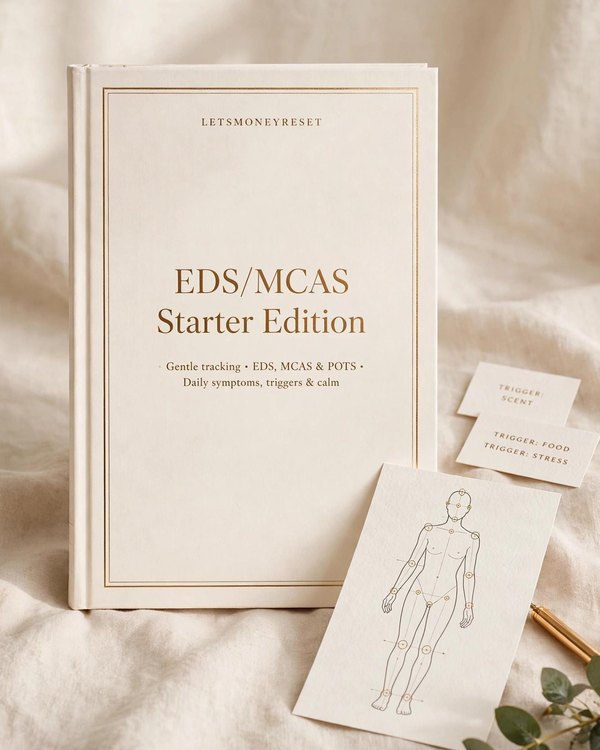
Track symptoms, map pain, and walk into appointments with real records.
Join the list and get the free monthly budget worksheet plus first word on new planners.
No spam, ever. Unsubscribe anytime.