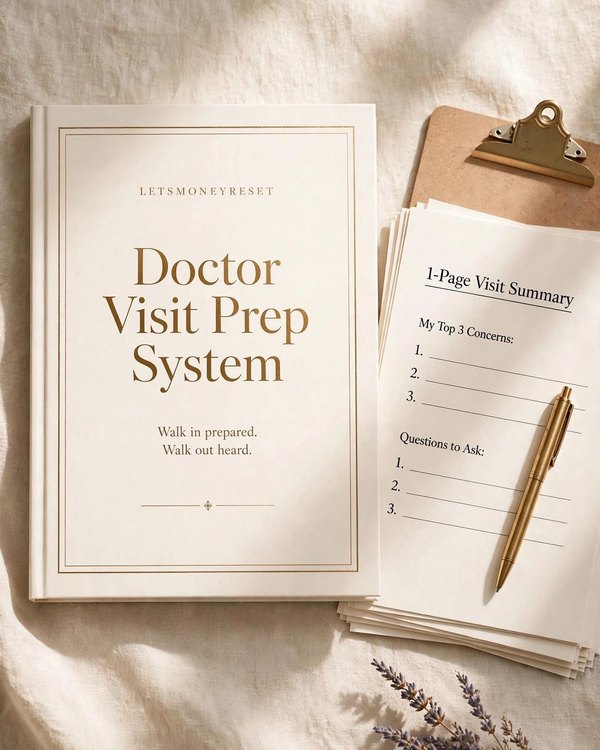
Doctor Visit Prep Printable
Walk in with your history, meds, and questions on one page.
$2.50 $9.99
Buy on Etsy →
Health and Caregiving
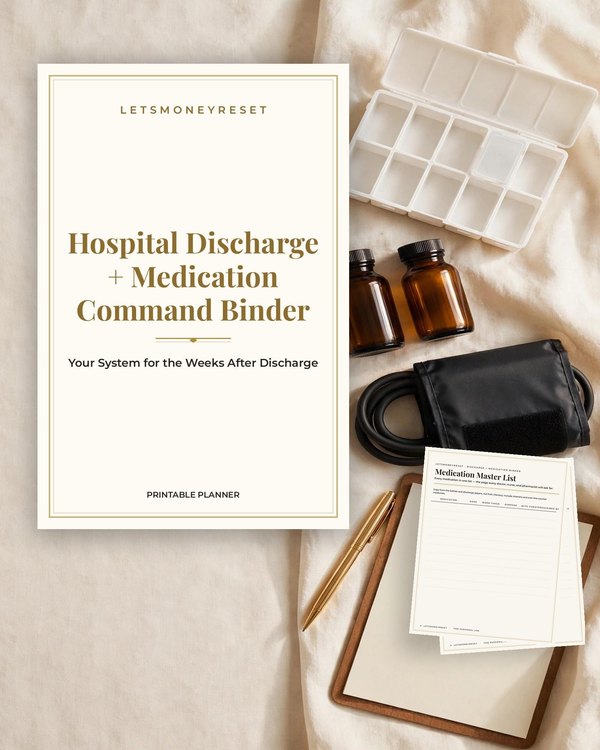
Keep every med, appointment, and paper in one place after a hospital discharge.
Coming home from the hospital is when the real work starts. New prescriptions with unfamiliar names, follow up appointments with three different offices, wound care or therapy instructions, and a stack of papers you were handed while still groggy. This 57 page printable binder turns that chaos into one organized system.
It was built for the person doing the managing, whether that is you recovering at home or a family member coordinating care. The discharge day checklist makes sure you leave the hospital with answers, and the medication pages take over from there, one day at a time.
The binder opens with a discharge day checklist of questions to ask before you leave the building, the ones people always think of in the car on the way home. Then comes the medication master list with a daily schedule and a weekly grid, so every pill has a name, a dose, a time, and a purpose written down in one place.
Daily medication logs let you check off each dose so you never wonder whether it was taken. Supporting pages include a side effects log, a vital signs log, a follow up appointment tracker, provider contacts and pharmacy info, red flags pages that spell out when to call the doctor or go to the ER, and a billing and claims tracker for the paperwork that follows.
This is for anyone leaving the hospital with more than a couple of new prescriptions. It is especially useful after surgery, a cardiac event, or any stay where the medication list changed a lot. The daily logs matter most in the first two weeks, when the schedule is new and mistakes are easiest to make.
It is also for caregivers. If you are managing medications for a parent or partner, the binder becomes the shared source of truth. Any family member can open it and see exactly what was taken, what is due next, and who to call with questions.
Before you leave the hospital, work through the discharge day checklist with the nurse. Ask every question on it, and write the answers down. When you get home, fill in the medication master list from the discharge papers, then set up the weekly grid so the whole week is visible at a glance.
Each morning, use that day's medication log. Check off doses as they are taken and note any side effects or vital signs on their pages. Bring the binder to every follow up appointment. Doctors get better information from a written log than from anyone's memory of a rough week.
Medication errors after discharge are common and most of them are simple: a dose taken twice, a new pill confused with an old one, a prescription never picked up. A written log with checkboxes catches those mistakes in the moment, when they are still easy to fix.
The red flags pages serve a different purpose. When something feels wrong at midnight, you should not have to decide from memory whether it is worth a call. The page tells you plainly: call the doctor for this, go to the ER for that. That clarity is worth more than the whole rest of the binder on a bad night.
Print the binder before or right after discharge. Start with the discharge day checklist while you are still at the hospital.
Fill in the medication master list and weekly grid from your discharge papers, then use a fresh daily log each morning.
Bring the binder to every follow up visit and keep the billing tracker current as statements arrive.
What buyers ask before downloading this planner.
Ideally before the discharge happens, so the checklist is in your hands at the hospital. But it works fine printed at home on discharge day too. The first pages you need are the checklist and the medication master list.
It is a 57 page printable binder. You will reprint the daily medication logs often in the first weeks, and the master pages like contacts and red flags stay constant.
Yes, and that is one of its best uses. Keep the binder where the medications are. Anyone giving a dose checks it off on the daily log, so the next person always knows what has been taken.
Yes. The billing and claims tracker keeps hospital statements, claim numbers, and payment notes with the medical pages instead of in a separate pile. After a hospital stay the bills arrive for weeks, and this keeps them attached to the care they belong to.
They are simple reference pages listing warning signs after discharge, grouped into when to call the doctor and when to go to the emergency room. They are meant for those uncertain moments, especially at night, when you need a clear answer fast.
No. It is an organizational tool for tracking medications, appointments, and records. It does not diagnose, prescribe, or replace your care team's instructions. Always follow what your doctor and pharmacist tell you.
Planners from the same collection, built to work together.
Walk in with your history, meds, and questions on one page.

Show your doctor real data, and walk in believed.

Fight insurance denials with a case file, not a shoebox.
Join the list and get the free monthly budget worksheet plus first word on new planners.
No spam, ever. Unsubscribe anytime.