
Sunday Scaries Reset Kit
Beat Sunday night dread and rest before the work week.
$2.50 $9.99
Buy on Etsy →
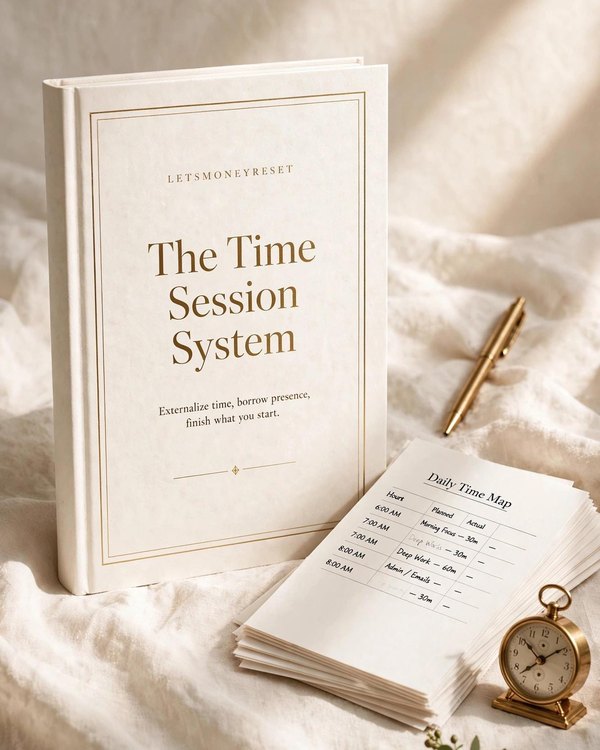
Focus and Mind
Map your day, run timed sessions, stop losing hours.
Time blindness is the ADHD experience of not feeling time pass. You sit down for five minutes and surface two hours later. Alarms do not fix it, because the problem is not remembering. The problem is that time itself has no texture. This 53 page printable planner gives your day texture: maps, timers, sessions, and a body double.
Inside you get daily time maps, an estimate calibration log, a transition buffer builder, a body doubling session planner with a session log and debrief pages, focus sprint sheets, a weekly session tracker, invite scripts, Now/Next/Later boards, and an SOS page that gets you into a session in 60 seconds.
Body doubling is simple: you work while another person is present, in the room or on a video call, each doing your own thing. For ADHD brains, the presence of another person provides just enough external structure to start and enough gentle accountability to keep going. It is one of the most reliable focus tools in the ADHD toolkit, and this planner turns it into a repeatable system.
The session planner walks you through setting up each session: what you will work on, how long the sprint runs, and what counts as done. The session log records what actually happened, and the debrief page asks what helped and what to change. The invite scripts give you the exact words to ask a friend, coworker, or online buddy to double with you, which removes the awkwardest part.
Most people with time blindness do not just lose track of time. They also misjudge how long things take, usually by a lot. The estimate calibration log fixes this with data. Before a task, you write down how long you think it will take. After, you write down how long it actually took. After a few weeks, your personal pattern emerges, and your plans start matching reality.
The transition buffer builder tackles the other half of the problem: the lost minutes between tasks. Getting up, finding the thing, switching mental gears, all of it takes longer than you think. The builder helps you add honest buffers between blocks so your day map stops collapsing by noon.
Each day starts with a time map: your hours laid out visually so the day has shape before it begins. You place your body doubling sessions and focus sprints on the map like appointments. The focus sprint sheets break work into timed bursts with a defined start and end, which is far easier for an ADHD brain to enter than an open ended work block.
The Now/Next/Later boards catch everything else. Tasks that are not on today's map go on the board instead of rattling around your head. Later gets reviewed, not forgotten. The weekly session tracker shows your doubling sessions at a glance so you can see which rhythms actually produce focus and do more of those.
It is for adults and teens with ADHD who lose hours without noticing, who chronically underestimate tasks, and who know body doubling works for them but have never made it a system. It is for students whose study sessions dissolve, freelancers whose workdays evaporate, and anyone whose to do list is really a list of good intentions.
It is also for the newly diagnosed. If you just learned that time blindness has a name, this planner gives you tools for it on day one instead of leaving you to figure it out alone. The SOS page is there for the worst days: one page, 60 seconds, and you are in a session instead of staring at the wall.
Download and print the planner, then fill in one daily time map for tomorrow and place your first body doubling session on it like an appointment.
Use the invite scripts to line up a doubling buddy, real or virtual, and run your session with the sprint sheets and session log.
Debrief each session, log your time estimates in the calibration log, and review the weekly tracker to find the rhythms that give you the most focus.
What buyers ask before downloading this planner.
Body doubling means working in the presence of another person, in person or on a video call, while each of you does your own work. The other person's presence gives ADHD brains enough external structure to start tasks and keep going. This planner includes scripts for inviting someone and a full system for planning and logging sessions.
Virtual doubling counts. Many people double over video calls with a friend, a coworker, or a body doubling community online. The invite scripts include wording for asking someone you do not know well, and the system works the same whether your double is across the table or across the country.
Regular planners assume you can feel time passing and estimate tasks accurately. This one assumes you cannot, and builds the whole system around that: visual time maps, calibration logs, transition buffers, and timed sessions instead of open ended to do lists.
It is a single page designed for the days when everything feels impossible. It walks you through starting a body doubling session in 60 seconds, with no decisions required. When you cannot plan, you can still SOS.
Yes. The PDF works in tablet note apps with a stylus, which is nice for the daily time maps. Many people print the daily pages fresh each morning and keep the reference pages in a binder.
No, and it does not claim to. Time blindness is a neurological trait, not a character flaw. This planner gives you external structure that compensates for it: maps, timers, doubles, and data about your own patterns.
Planners from the same collection, built to work together.
Beat Sunday night dread and rest before the work week.
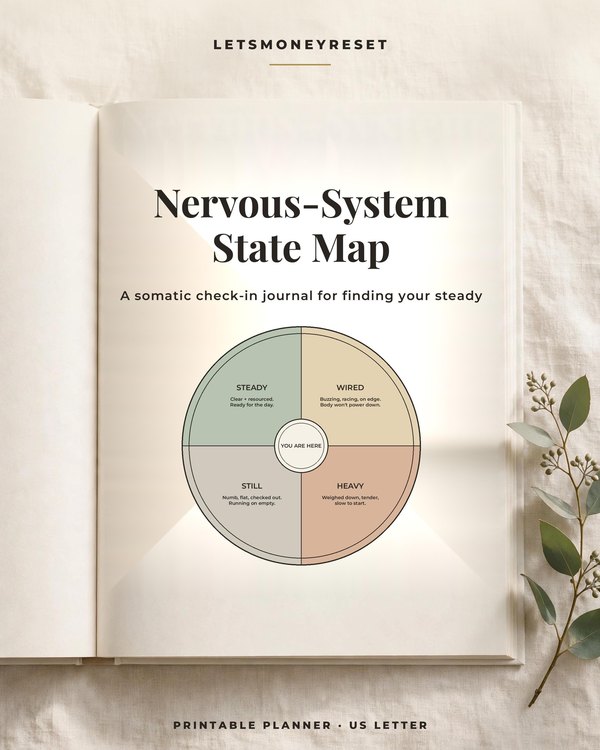
Notice how you feel, and choose what helps.
Small, sturdy tools for the moment you need them.
Join the list and get the free monthly budget worksheet plus first word on new planners.
No spam, ever. Unsubscribe anytime.