
Two Week Wait Planner
Structure and support for the hardest two weeks of trying.
$2.50 $9.99
Buy on Etsy →



Family and Kids
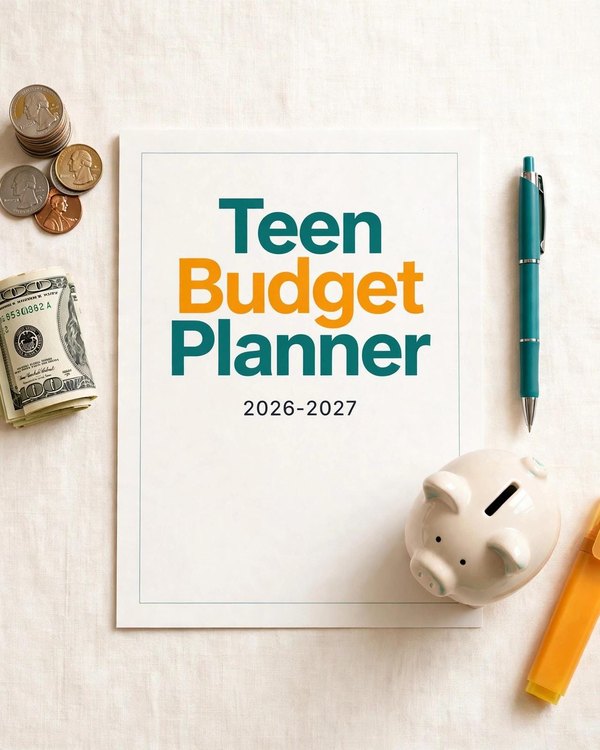
Give your teen the money skills school never teaches.
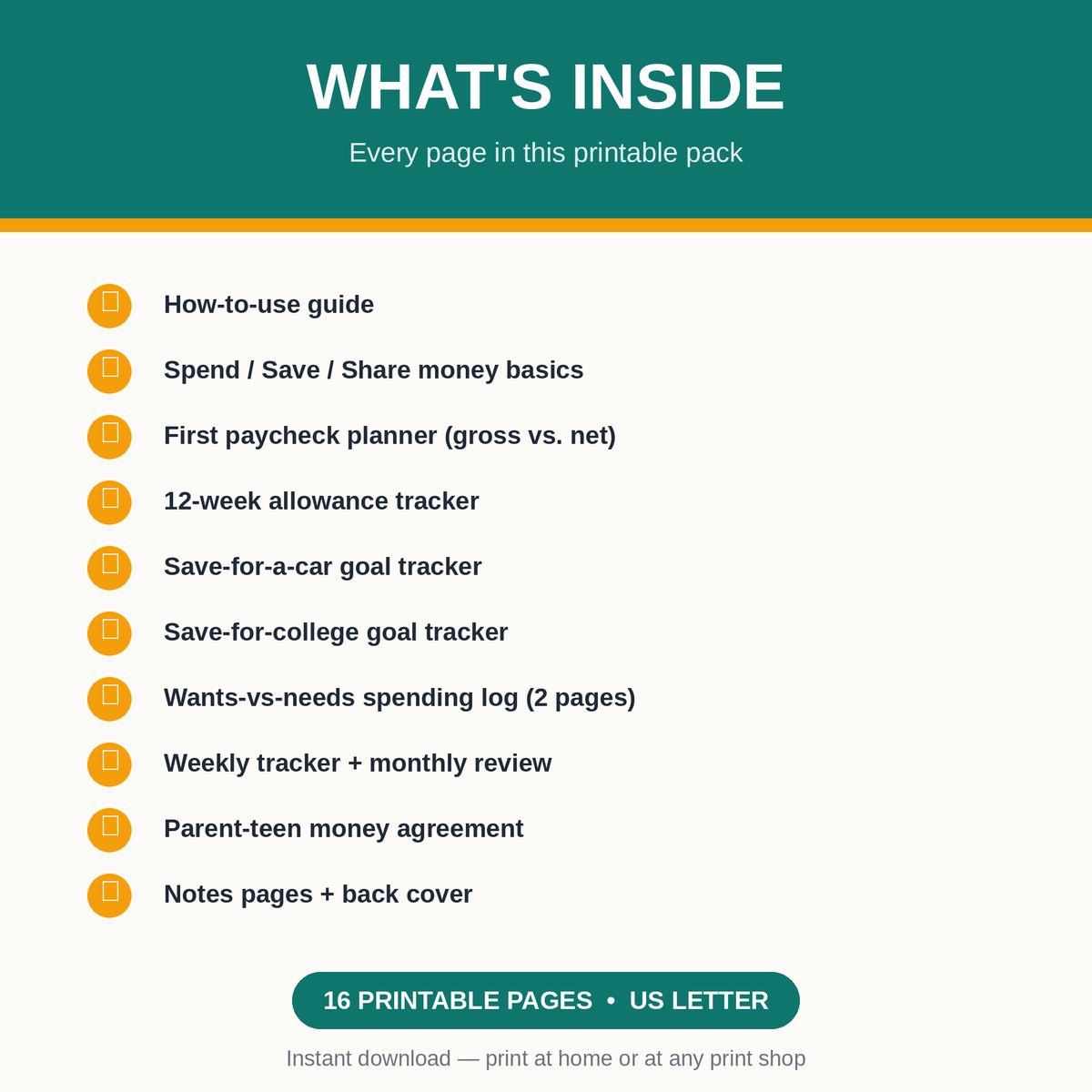
School teaches algebra, not money. Most teens reach their first paycheck with no idea what gross versus net means, no framework for splitting it up, and no habit of tracking where it goes. This 16 page planner fills that gap. It starts with the basics, the 60/30/10 Spend Save Share rule and simple interest explained step by step, then moves to real life: first paychecks, allowance, saving for a car, and telling wants from needs.
The tone matters here. This is not a lecture from a parent disguised as a workbook. It is written directly to the teen in plain language, with worksheets that feel like tools rather than homework. The goal is a teenager who understands money before money gets complicated.
The planner opens with the 60/30/10 rule: 60 percent of money for spending, 30 percent for saving, 10 percent for sharing or giving. It is simple enough to remember and flexible enough to actually use. Every dollar that comes in gets split three ways before it gets spent one way.
Then simple interest, explained the way it should have been in school: with real numbers and a clear picture of what it does to savings and to debt. A teen who understands interest before their first credit card offer is a teen with armor on.
The first paycheck is a rite of passage and a shock. The gross versus net explainer shows why the number on the offer and the number on the check are different: taxes, Social Security, and any deductions, laid out in plain English. No teen should have to learn what FICA is from a disappointing deposit.
The 12 week allowance tracker with its savings rate calculator builds the tracking habit on money teens already get. Twelve weeks of logging allowance or job income, with a running savings rate that turns good habits into a score worth improving.
The saving for a car goal tracker takes the most common teen money goal and makes it concrete: the price of the car, insurance, gas, and maintenance, because the car costs more than the car. Breaking the total into weekly savings targets turns an impossible number into a plan.
The wants versus needs worksheet is the critical thinking page. Teens sort their spending into wants and needs and defend the borderline cases. It is not about saying no to everything fun. It is about knowing the difference before the money is gone.
This planner is for teens roughly 13 to 19, whether they have a part time job, get an allowance, or are about to get their first paycheck. Parents buy it most often, and the best way to use it is together at first: work the first few pages side by side, then let the teen run it.
It also works for grandparents, mentors, and youth group leaders looking for a practical money gift. A teen who gets this instead of cash gets something better than cash: the skills to keep the next cash that comes along.
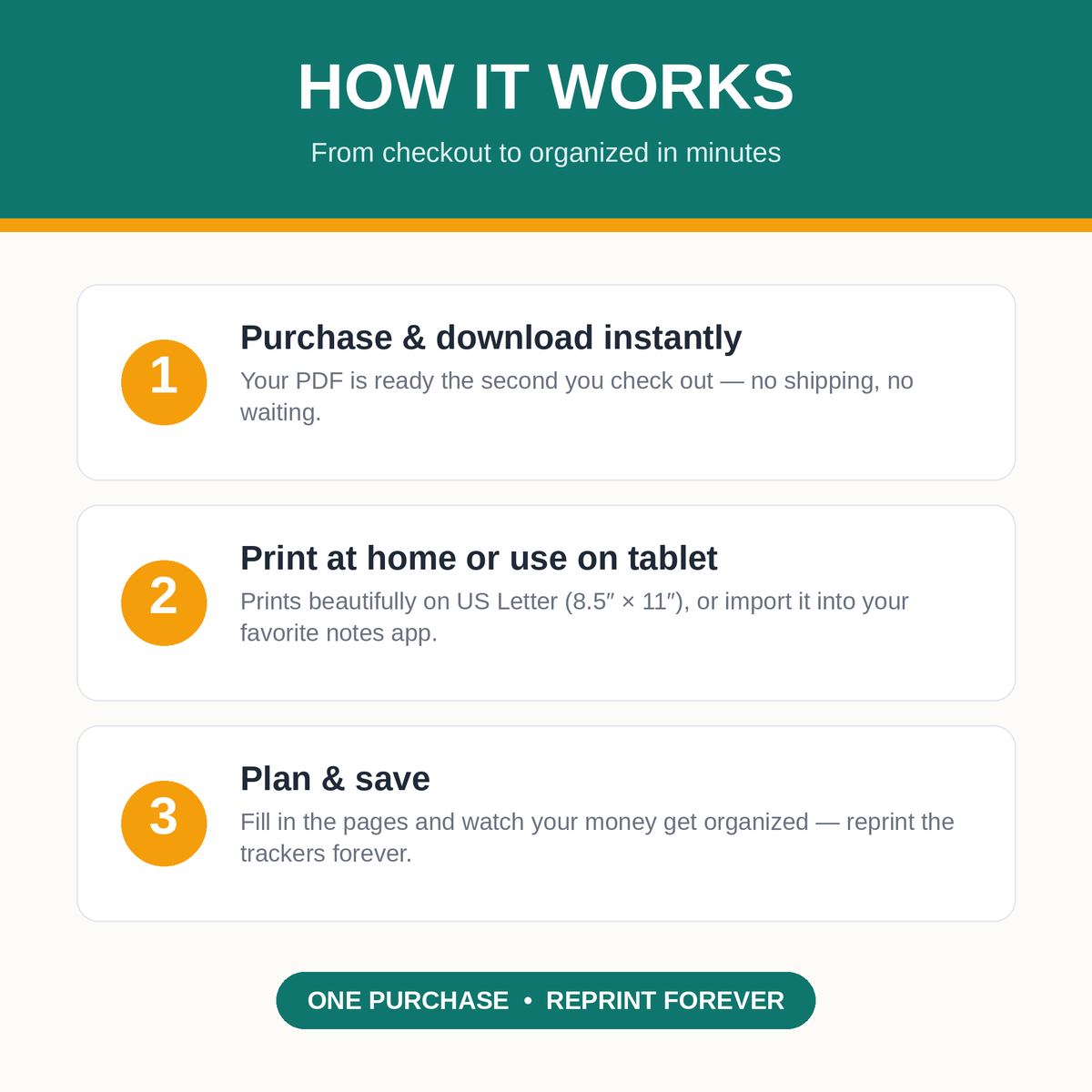
Download and print the planner. Work through the 60/30/10 rule and simple interest pages first.
Use the first paycheck planner when income starts, and log allowance or earnings in the 12 week tracker.
Set a savings goal like a car, sort wants from needs, and keep the spending log going.
What buyers ask before downloading this planner.
Roughly 13 to 19. Younger teens focus on the allowance tracker and wants vs needs pages; older teens with jobs get the most from the first paycheck planner and car savings tracker.
No. It is written directly to the teen in plain language, not as a lecture. The worksheets feel like tools, and the tone respects the reader.
Yes, though working the first few pages together helps. After that most teens can run it on their own, which is kind of the point.
It covers what happens after: understanding the paycheck, splitting it with 60/30/10, and tracking it. The first paycheck planner is the centerpiece for working teens.
It is a printable PDF. Paper works well for teens learning this stuff for the first time, and the pages can be reprinted as goals change.
No. The allowance tracker and wants vs needs pages work with any money a teen receives. The job specific pages wait until there is a paycheck.
Planners from the same collection, built to work together.
Structure and support for the hardest two weeks of trying.


Log your child's therapy sessions and medications side by side.
Join the list and get the free monthly budget worksheet plus first word on new planners.
No spam, ever. Unsubscribe anytime.