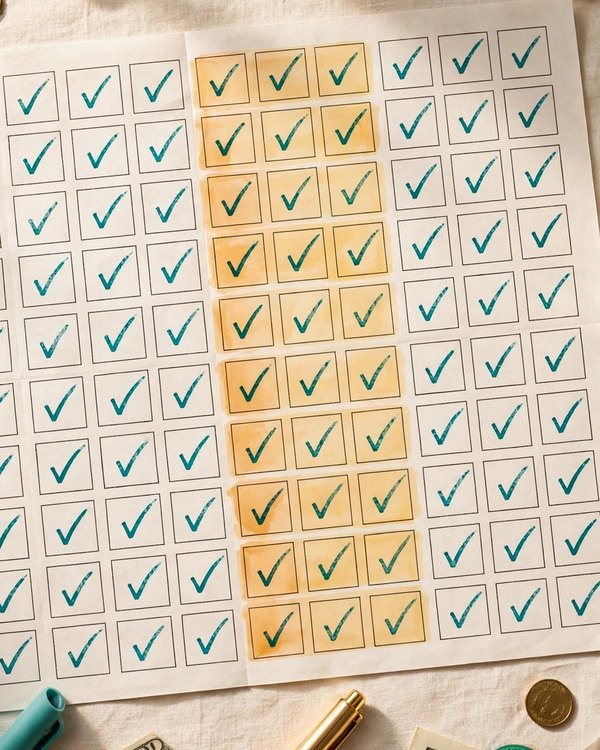
52 Week Money Challenge 2027 Printable
Save $1,378 in 2027, one weekly deposit at a time.
$1.50 $5.99
Buy on Etsy →

Budget Planners
Never get blindsided by car repairs, holidays, or annual bills again.
A sinking fund is money you set aside a little at a time for a bill you know is coming. Car insurance every six months, holiday gifts every December, the annual vet visit, new tires. These are not emergencies. They are predictable expenses that feel like emergencies because nobody saved for them.
The math is simple: a $600 bill due in 12 months needs $50 a month starting now. A sinking fund turns that math into a habit. When the bill arrives, the money is already there, and your monthly budget never feels it.
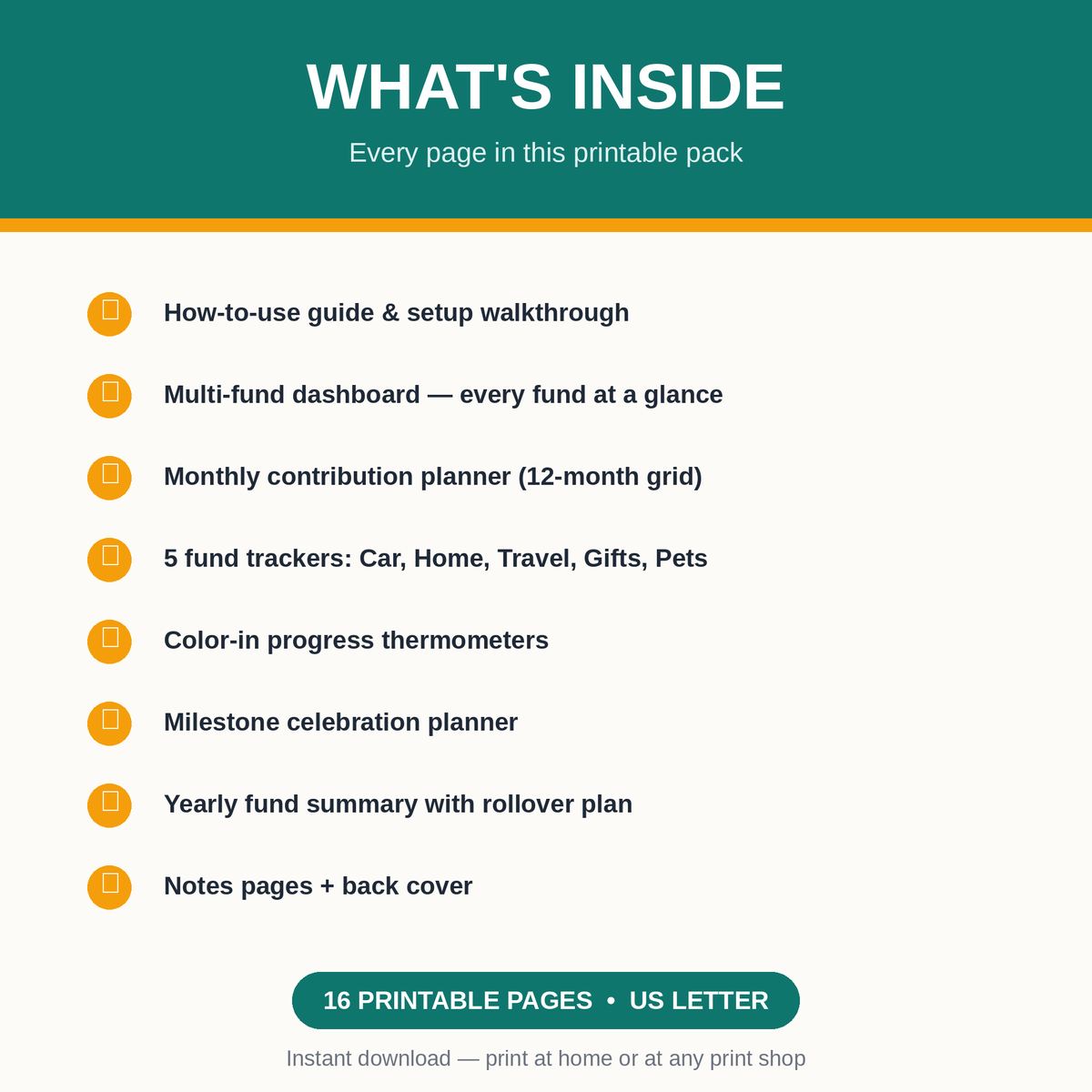
You start with a 4 step setup plan that walks you through listing your irregular expenses, calculating the monthly amount for each, and choosing your fund lineup. Most people land on 4 to 8 funds. The tracker supports up to 6 on the contribution planner, which keeps the system focused instead of scattered.
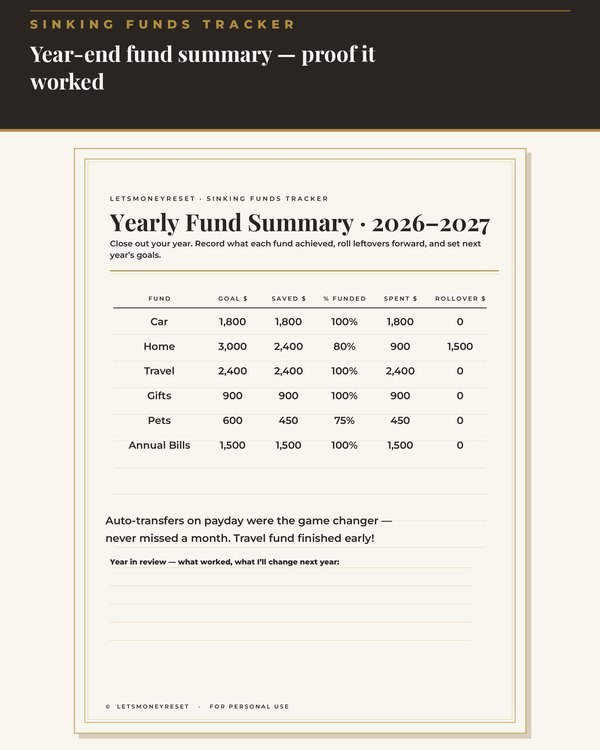
The multi fund dashboard is the heart of the tracker. Every fund, its goal, its deadline, and its current balance sit on one page, so a single glance tells you where you stand. Each fund also gets a dedicated tracker page with a deposit log and a progress thermometer you color in as the balance grows.
Knowing you need $50 a month is not the same as doing it. The 12 month contribution planner maps every fund's monthly deposit across the full year, so saving becomes a line in your budget instead of a vague intention.
This is where sinking funds beat willpower. When the deposit is planned alongside rent and groceries, it gets paid like a bill. When it is not planned, it gets skipped. The planner makes the invisible visible for all 12 months at once.
Start with the bills that have ambushed you before. For most households that means car repairs or maintenance, holiday and gift spending, annual or semiannual insurance premiums, and home maintenance. Those four funds alone prevent most budget blowups.
Add funds for your life after that: vet bills, annual subscriptions, back to school costs, vacation savings, or a car replacement fund. The setup guide helps you estimate each fund's yearly total even when the exact bill varies, using last year's numbers as your baseline.
These are different tools. Your emergency fund covers true surprises: job loss, a broken furnace in January, a medical bill. Sinking funds cover the expected: the things you know are coming but cannot pay from one month's budget.
Mixing them is the classic mistake. When holiday spending comes out of the emergency fund, the emergency fund never grows. Separate the two and both do their jobs. Many people run this tracker alongside their emergency savings and watch both balances climb.
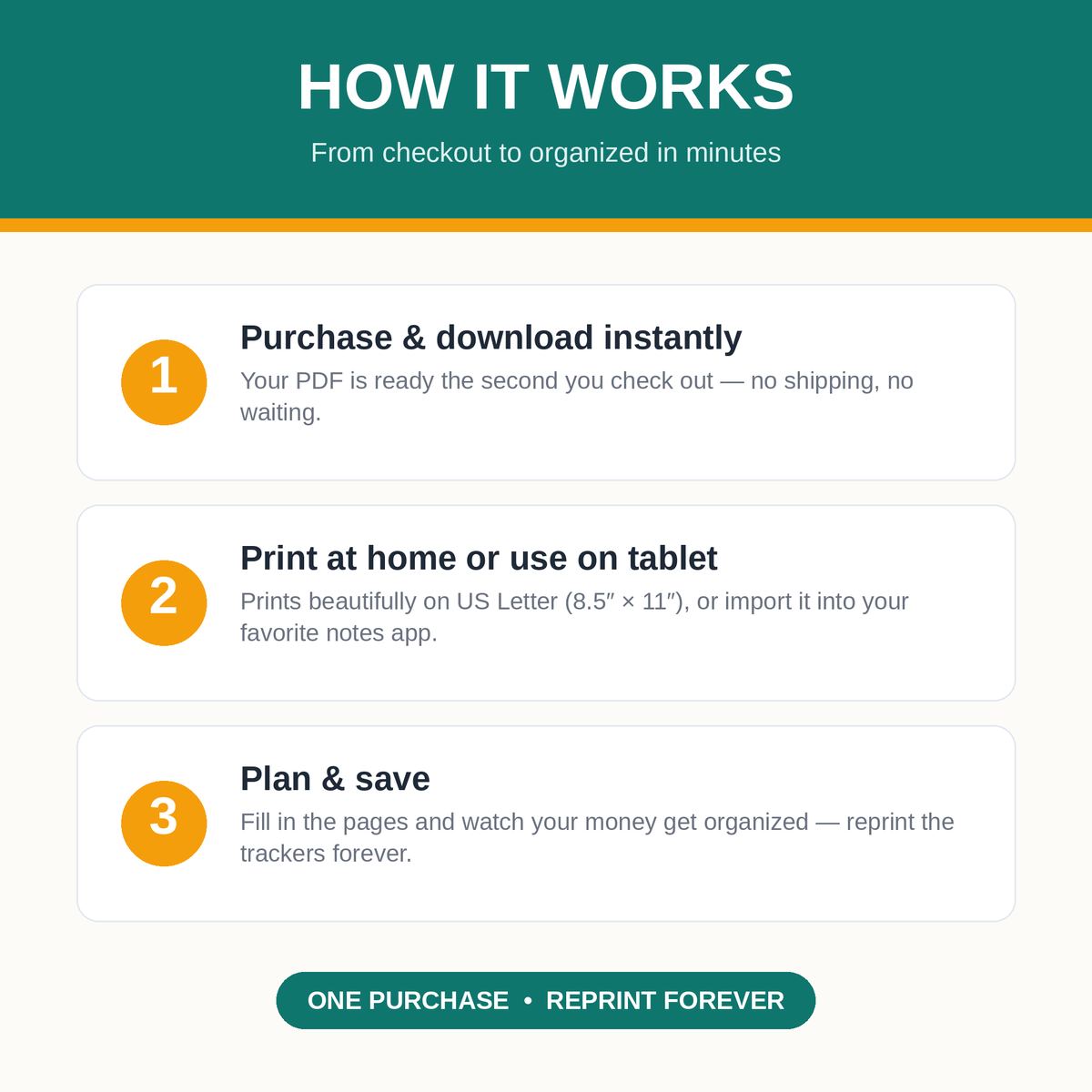
Download and print the tracker, then work through the 4 step setup plan to list your irregular bills and calculate the monthly deposit each one needs.
Set up your funds on the dashboard page and fill in the 12 month contribution planner so every deposit is scheduled like a bill.
Log each deposit on its fund tracker, color in the thermometer as balances grow, and spend from the fund guilt free when the bill arrives.
What buyers ask before downloading this planner.
Most households do well with 4 to 8. Start with the bills that have surprised you before, like car repairs, holidays, and insurance premiums. The contribution planner supports up to 6 funds, which keeps the system focused.
Take the yearly total and divide by 12. A $600 semiannual car insurance bill is $1,200 a year, so $100 a month. The setup guide walks you through estimating when you only have last year's numbers to go on.
A separate savings account works best, ideally one per fund or one account you track carefully with this tracker. The key is keeping it out of your checking account so it does not get spent accidentally.
Sinking funds cover expected irregular bills like car repairs and holidays. Emergency funds cover true surprises like job loss. Keep them separate so planned spending never drains your safety net.
Yes. The tracker works as the record keeping layer for cash sinking funds too. Log each deposit on the fund page whether the money goes into a bank account or a physical envelope.
No. It is undated, so you can start your funds in any month and reprint the pages each year as your bills and goals change.
Planners from the same collection, built to work together.
Save $1,378 in 2027, one weekly deposit at a time.
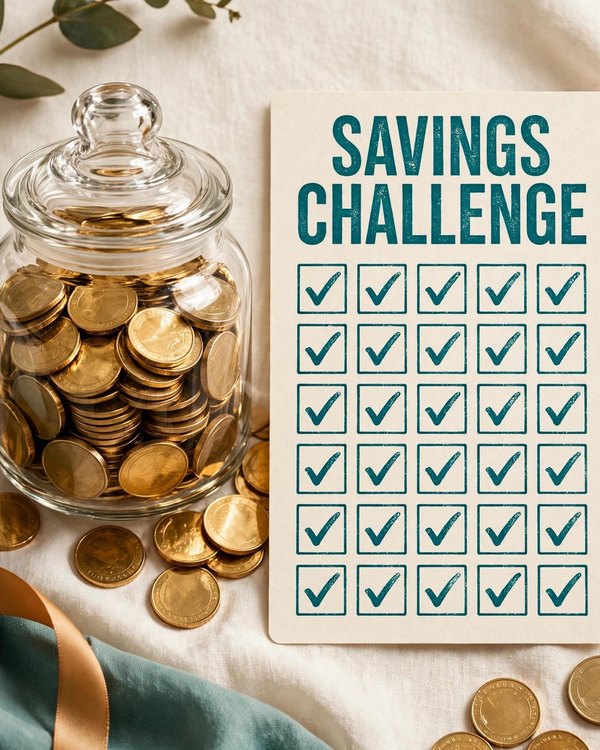
Turn saving into a game you'll actually finish.
Split kid costs cleanly, with a record you can both trust.
Join the list and get the free monthly budget worksheet plus first word on new planners.
No spam, ever. Unsubscribe anytime.