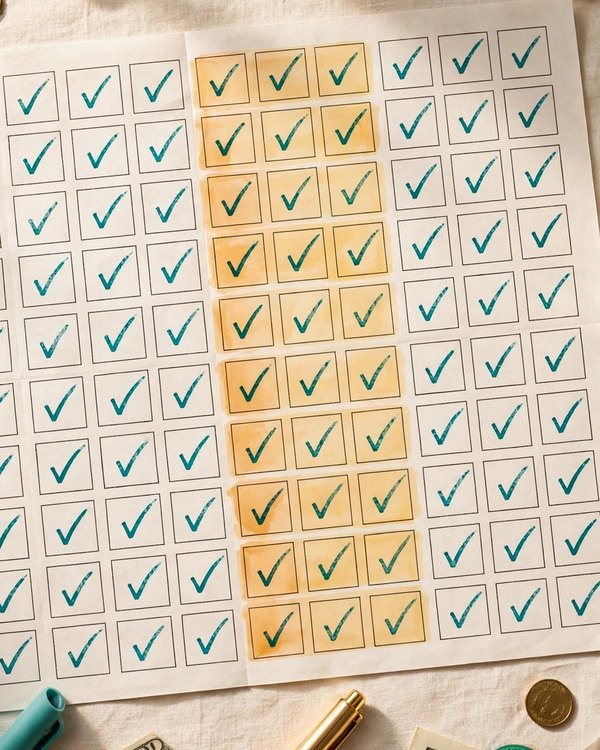
52 Week Money Challenge 2027 Printable
Save $1,378 in 2027, one weekly deposit at a time.
$1.50 $5.99
Buy on Etsy →
Budget Planners
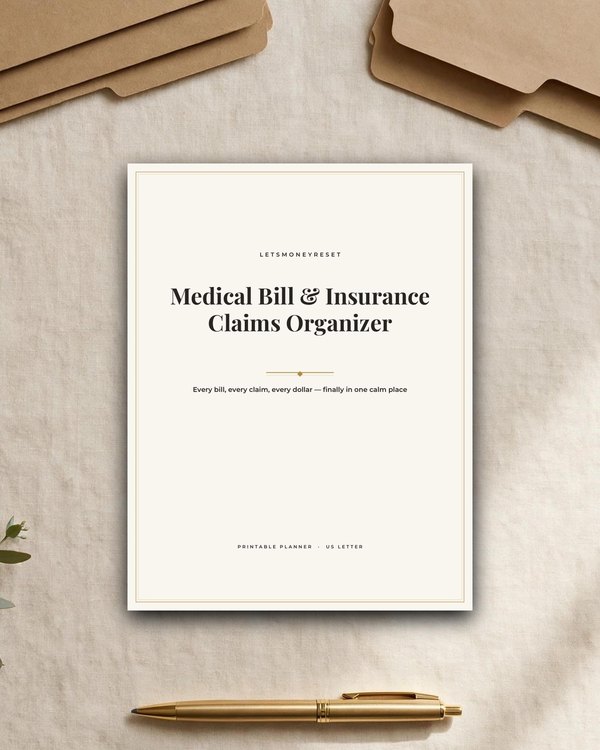
Medical Bill Organizer Printable
Medical paperwork is the least fun paperwork in your life and also the most expensive to get wrong. Bills arrive weeks after the visit, explanation of benefits forms use a different vocabulary than the bill, and errors are common enough that auditing is worth your time. This 20 page printable system gives every piece of that paper a place to live and a job to do.
It walks you through the full cycle: tracking each claim's status, reconciling the EOB against the actual bill line by line, auditing hospital bills for errors before you pay, logging disputes and appeals on one paper trail, managing payment plans, and closing the year with a clean tax time summary.
You start with an insurance snapshot page: your plan details, deductible, and out of pocket progress bars you shade in through the year, so you always know where you stand. The provider directory keeps every doctor, facility, and billing office with phone numbers in one place.
The working pages are the medical expense log with HSA and FSA checkboxes, a prescription tracker, a prior authorization tracker, and the claim status pages. The standout is the 9 point hospital bill audit checklist, which walks you through the most common billing errors before you pay a dollar.
This is for anyone who has opened a medical bill and thought, I have no idea if this is right. It is especially useful for people with ongoing care, families juggling bills for several people, and anyone who hit their deductible and wants to make sure every dollar counted.
It is also for the dispute stage. If an insurer denies a claim or a bill looks wrong, the dispute and appeals log gives you one paper trail with dates, reference numbers, and names. That record is what turns a frustrating phone call into a winnable one.
When a bill comes in, log it on the medical expense log with the date of service, provider, and amount. When the EOB arrives, reconcile the two line by line on the claim pages: what was billed, what insurance allowed, what you actually owe. If the numbers do not match, that is a flag, not a bill to pay.
For hospital bills, run the 9 point audit checklist before paying. Check for duplicate charges, services you did not receive, and coding mistakes. If you find a problem, log it in the disputes section and call with your notes in front of you.
Hospital bills have error rates that would be a scandal in any other industry. Duplicate line items, wrong codes, charges for cancelled procedures. Most people pay them unquestioned because the paperwork is intimidating. An audit checklist turns intimidation into a repeatable process anyone can follow.
There is also real money in the deductible tracking. People leave money on the table every year by not knowing they hit their out of pocket max, or by paying bills that should have been covered. The progress bars and the tax time summary make sure the year's medical spending is fully accounted for.
Print the organizer and fill in the insurance snapshot and provider directory once. Shade the deductible progress bar as the year goes.
Log every bill and EOB as it arrives, reconcile them line by line, and run the audit checklist on hospital bills before paying.
Use the dispute log for any denied claim or error, track payment plans, and close the year with the tax time summary.
What buyers ask before downloading this planner.
An EOB, or explanation of benefits, is the statement your insurer sends showing what was billed, what they covered, and what you owe. Reconciling means comparing it against the provider's bill line by line. When the two disagree, you have found either an error or a question worth asking before you pay.
The usual suspects are duplicate charges, services billed that were never provided, wrong procedure codes, and incorrect patient details that route the bill wrong. The 9 point audit checklist in the organizer walks you through each of these in order.
It is 20 printable pages. Enough to run the full system for a year of normal medical activity, and you can reprint the log pages as often as you need.
Yes. The expense log has space to note which family member each bill belongs to, and the tax time summary pulls the year together. Print extra log pages if you are managing bills for kids or a spouse too.
Yes. The dispute and appeals log keeps every denied claim on one paper trail with dates, reference numbers, and the names of people you spoke with. Appeals are won on documentation, and this gives you the documentation.
No. It is an organizational tool only. It helps you track, reconcile, and document your medical bills and claims. It is not medical, insurance, tax, or financial advice.
Planners from the same collection, built to work together.
Save $1,378 in 2027, one weekly deposit at a time.

Turn saving into a game you'll actually finish.
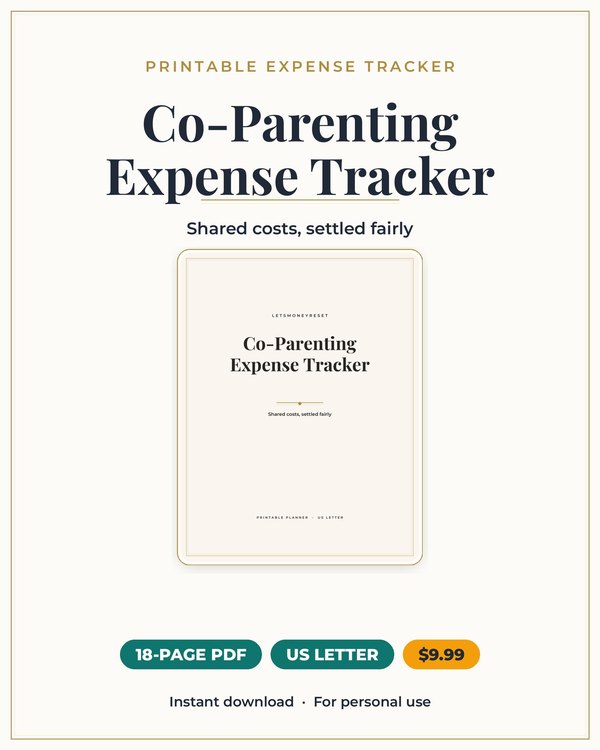
Split kid costs cleanly, with a record you can both trust.
Join the list and get the free monthly budget worksheet plus first word on new planners.
No spam, ever. Unsubscribe anytime.