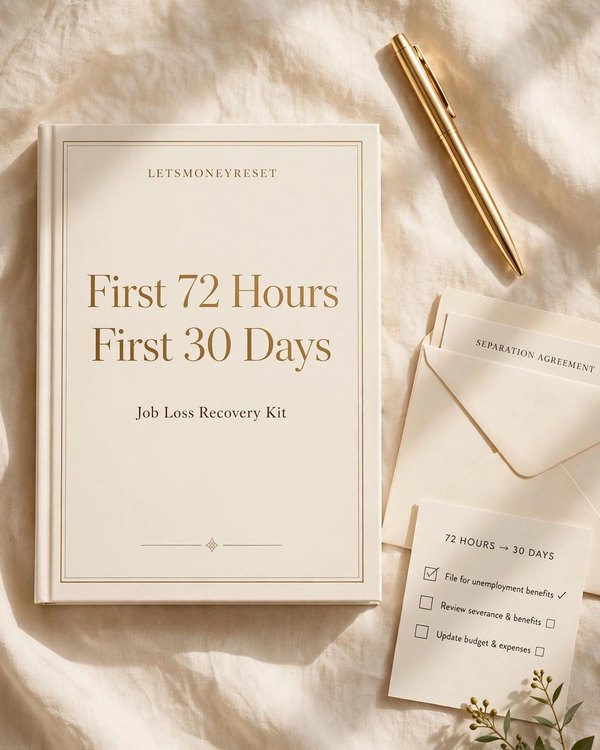
Job Loss Recovery Planner
A calm written plan for the layoff, the severance, and the search.
$2.50 $9.99
Buy on Etsy →

Life Events
The biggest purchase of your life, planned on paper instead of in your head.
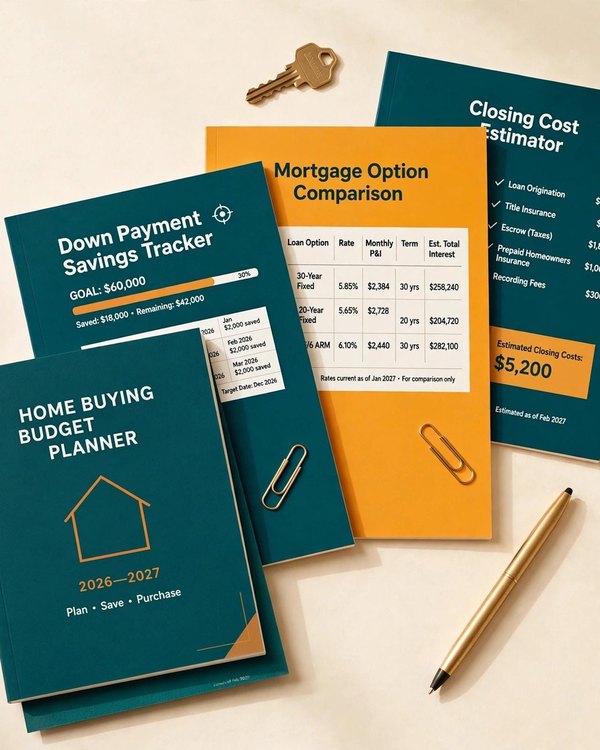
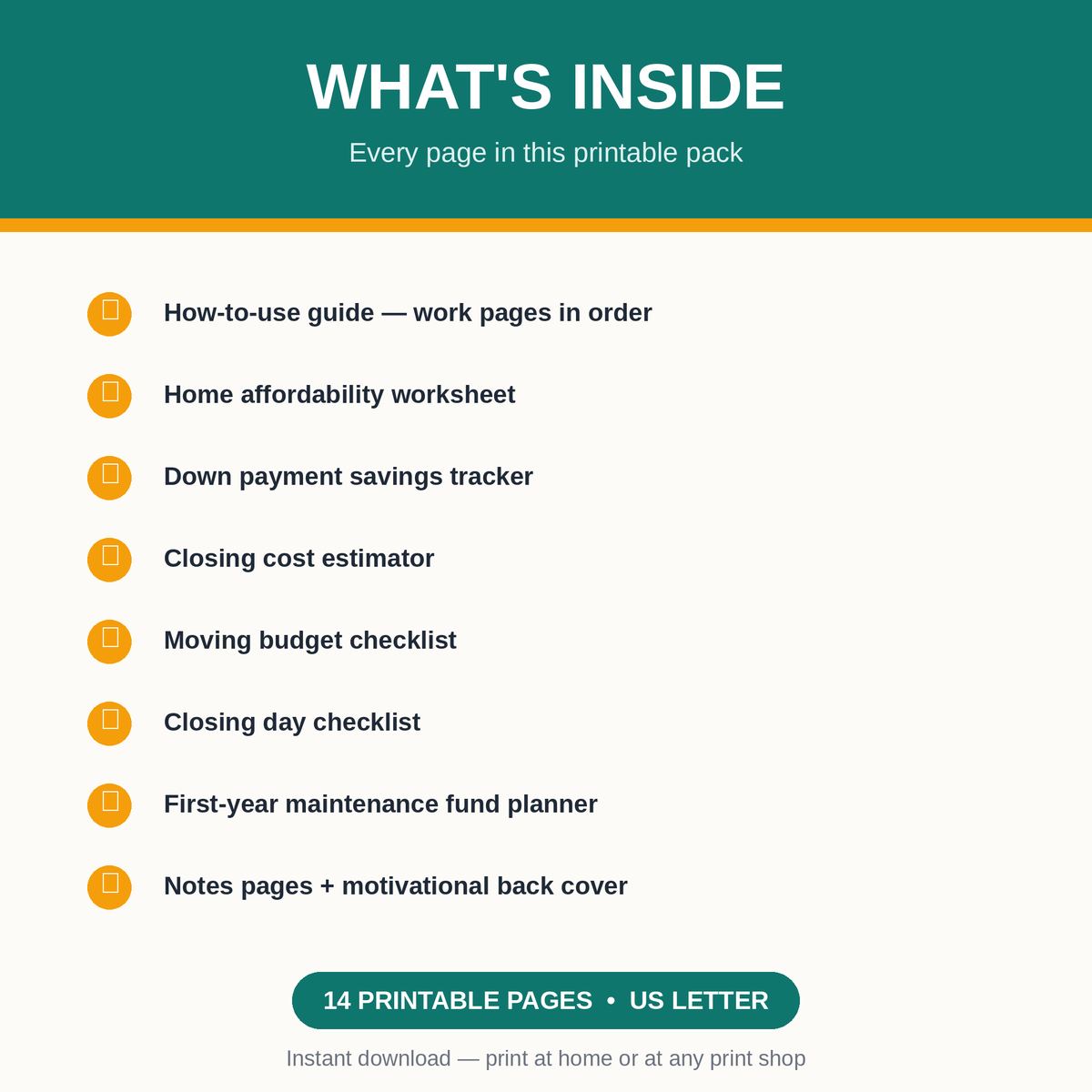
Buying a home is a dozen money decisions wearing a trench coat. How much house can you afford. How fast can you save the down payment. Which loan offer is actually cheapest. What closing will really cost. This 14 page workbook walks you through all of them in order, from saving to closing day.
Inside you get a home affordability worksheet, a down payment savings tracker with milestone markers, a 3 offer mortgage comparison table, a closing cost planner, a house hunting checklist, and a moving budget list. Work the pages front to back and every decision builds on the last.
The affordability worksheet starts where every buyer should start: your income, your debts, and your real monthly budget. It shows you the home price that fits your life, not the maximum a lender will approve. Lenders approve maximums. Maximums are how people end up house poor.
This matters more than any other page. Buyers who shop with a clear affordability number make calmer offers, negotiate better, and sleep better after closing. Buyers who shop with a preapproval letter and a vague feeling end up stretched from month one.
A down payment is the longest savings project most people ever run, which is exactly why it needs milestones. The tracker breaks your target into markers, so instead of staring at a five figure goal for two years, you celebrate each 10 percent and watch the bar move.
The worksheet also helps you think clearly about the down payment size decision. Twenty percent avoids PMI but takes longer. A smaller down payment gets you in sooner but costs more monthly. There is no universal right answer, only the right answer for your timeline and your market, and the pages help you see both.
Mortgage offers are designed to be hard to compare. One lender leads with a low rate and high fees. Another leads with credits and a higher rate. The 3 offer comparison table lines up rate, points, fees, monthly payment, and total cost side by side so the cheapest loan is obvious instead of arguable.
Fill this in during your rate shopping window and bring it to every lender conversation. Loan officers negotiate differently when they can see they are being compared on paper. Even a quarter point difference is worth thousands over the life of the loan.
First time buyers consistently underestimate closing costs, which typically run 2 to 5 percent of the purchase price. The closing cost planner lists every fee category so you can estimate the total before you are staring at a settlement statement with 48 hours to find the money.
The moving budget list closes the workbook. Movers, deposits, utility hookups, immediate repairs, the costs of the first month in the house. Planning them on paper keeps move in month from becoming a credit card month.
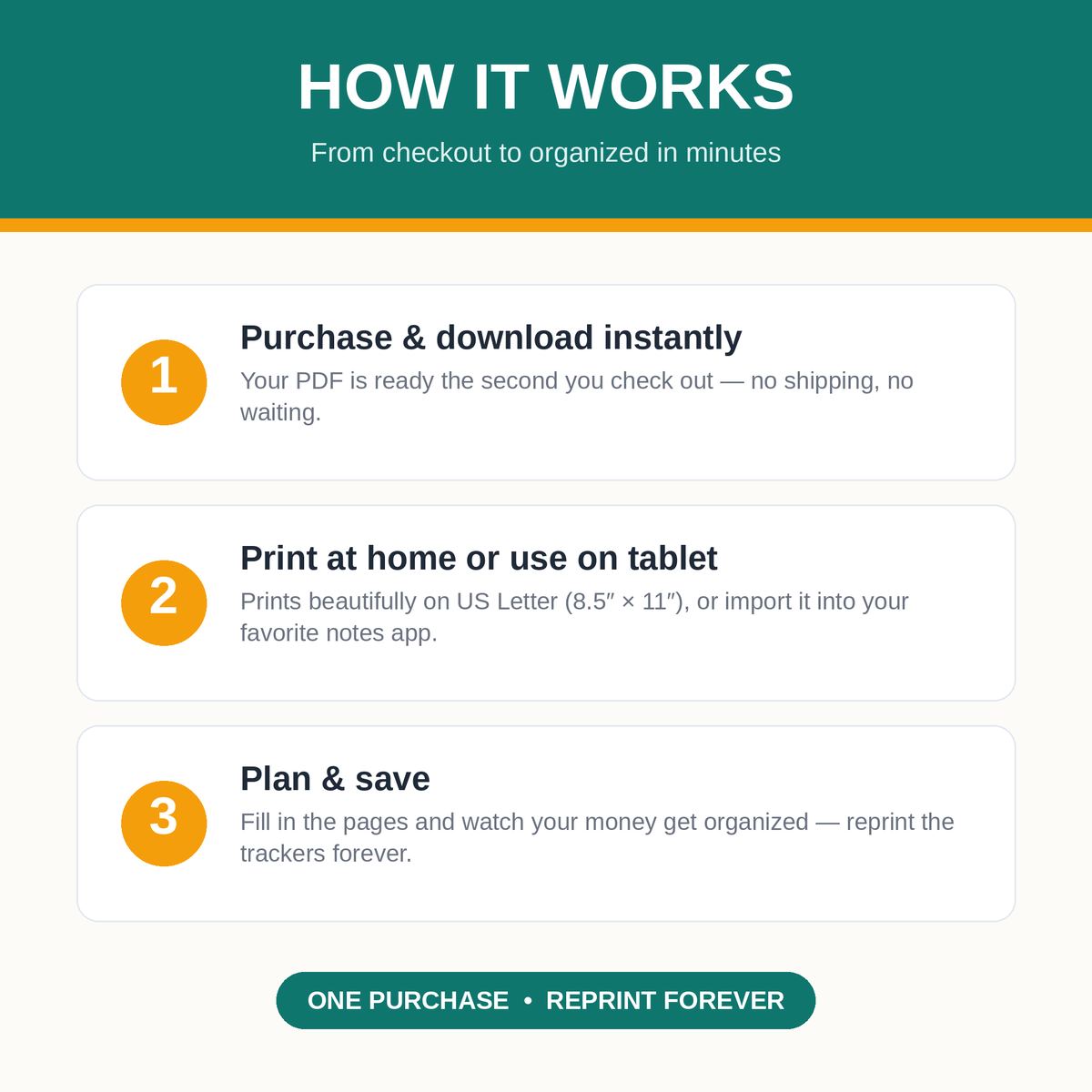
Download and print the workbook, then complete the affordability worksheet to learn the home price that fits your real budget.
Set your down payment target on the tracker and work the milestones while you house hunt with the checklist.
Compare loan offers in the 3 offer table during rate shopping, estimate closing with the cost planner, and budget the move itself.
What buyers ask before downloading this planner.
The affordability worksheet calculates it from your income, debts, and monthly budget. As a starting rule, many buyers aim for a home price around 3 to 5 times their annual income, but your debts and local taxes matter more than any rule of thumb.
It depends on your loan type and market. Twenty percent avoids private mortgage insurance on conventional loans, but many buyers put down 3 to 10 percent and buy sooner. The tracker helps you set and reach whichever target fits your plan.
The fees paid at settlement: lender fees, title insurance, appraisal, prepaid taxes and insurance, and more. They typically run 2 to 5 percent of the purchase price, and the planner lists each category so you can estimate yours.
Line up at least three offers in the comparison table: interest rate, points, lender fees, monthly payment, and total cost over the loan term. The cheapest monthly payment is not always the cheapest loan.
It is written for first time buyers, but the worksheets work for any buyer. Move up buyers use the same affordability math and closing cost planner, just with a sale funding the down payment.
No. This is an organizational workbook for planning your purchase. It does not provide mortgage, tax, or investment advice. For guidance on your specific situation, talk to a qualified mortgage or financial professional.
Planners from the same collection, built to work together.
A calm written plan for the layoff, the severance, and the search.

Divorce is overwhelming enough. Your money shouldn't add to the chaos.

The money side of your renovation, kept calm on paper.
Join the list and get the free monthly budget worksheet plus first word on new planners.
No spam, ever. Unsubscribe anytime.