
52 Week Money Challenge 2027 Printable
Save $1,378 in 2027, one weekly deposit at a time.
$1.50 $5.99
Buy on Etsy →

Budget Planners
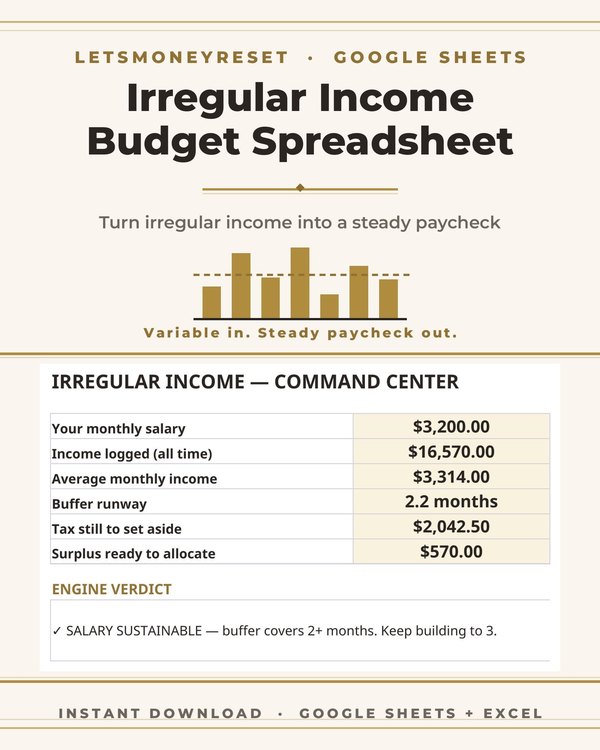
Budget variable income without guessing the lean months.
Freelance income does not arrive in neat monthly amounts. One month pays double, the next pays half, and the budget has to work in both. This undated planner averages your variable income over time so you can budget from a real number instead of hoping this month looks like last month.
It then defines your true monthly minimum, the number your life actually costs, and builds a buffer fund that carries you through the slow months. Quarterly tax tracking is built in too, because April should never be a surprise.
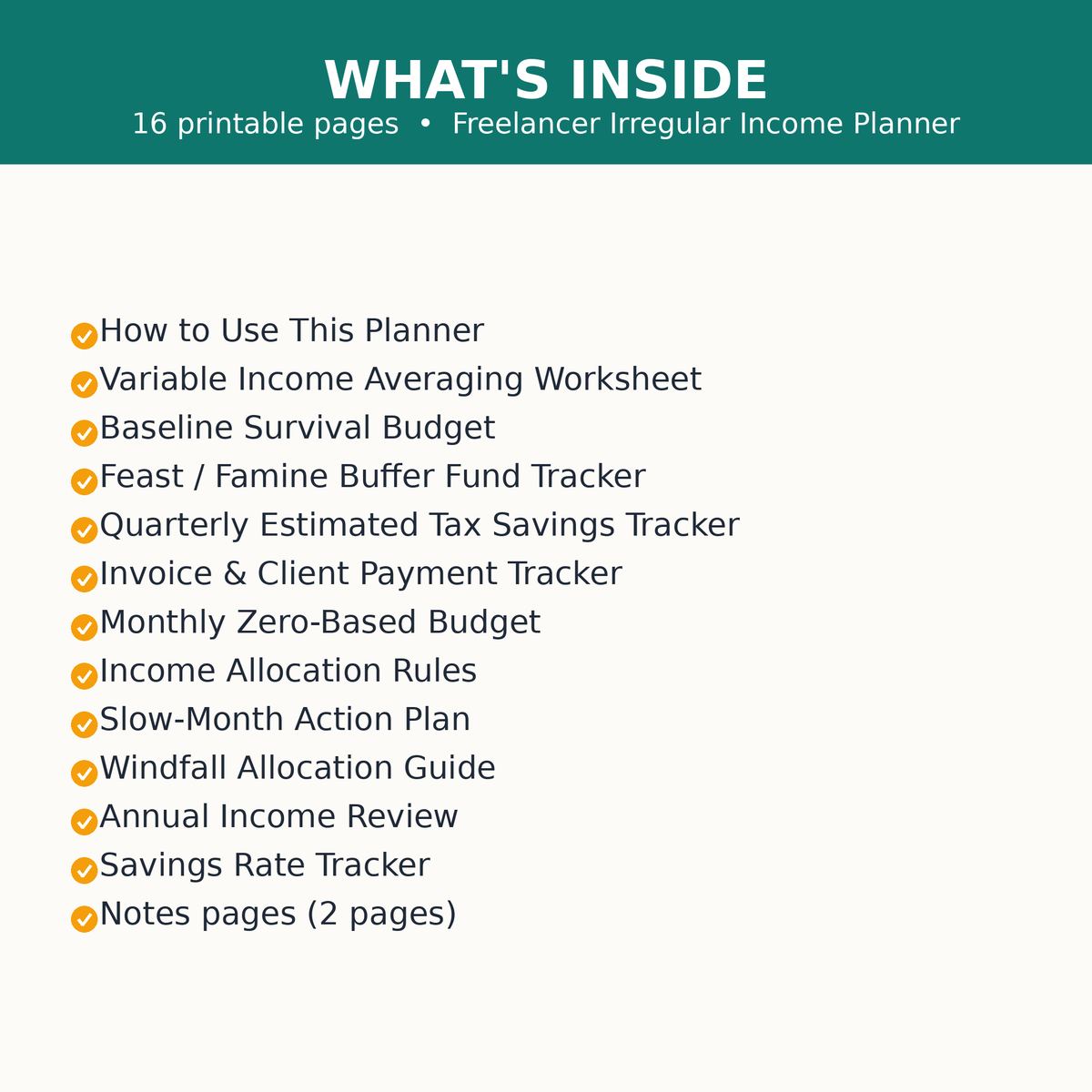
The variable income averaging worksheet takes your past months and turns them into one workable monthly figure. The baseline survival budget strips your spending to the true minimum, which is the number everything else is measured against.
From there you get the 12 month feast and famine buffer fund tracker, which is the heart of the system: surplus months feed the buffer, lean months draw from it. A zero based monthly budget assigns every dollar, an invoice tracker follows what clients owe you, and the quarterly tax planner sets aside what the IRS will want before it is due.
This is for freelancers, gig workers, and anyone whose paycheck changes size every month. Designers, writers, consultants, contractors, drivers, creators. If your income chart looks like a mountain range, this is the budgeting method built for that shape.
It also works if you are newly freelance and have no history to average yet. The worksheets walk you through estimating conservatively for the first months, then refining the numbers as real income data comes in.
First you average. Take several months of income, find the real monthly figure, and budget from that instead of from your best month. Then you define the survival baseline, the amount that covers rent, food, bills, and not much else.
In months you earn above the average, the extra goes into the buffer fund instead of into lifestyle. In months you earn below it, the buffer covers the gap. The 12 month tracker makes this visible so you can see the fund doing its job. Quarterly taxes get their own planner so estimated payments are set aside with every invoice, not scrambled for in April.
Standard monthly budgets assume the same money arrives every month. For freelancers that assumption breaks immediately, and the usual result is feast spending in good months followed by panic in slow ones. Averaging replaces hope with a number.
The buffer fund is the difference between surviving variability and being stressed by it. It is not an emergency fund for true emergencies. It is working capital for your personal finances, filled in the good months on purpose so the lean months feel normal instead of frightening.
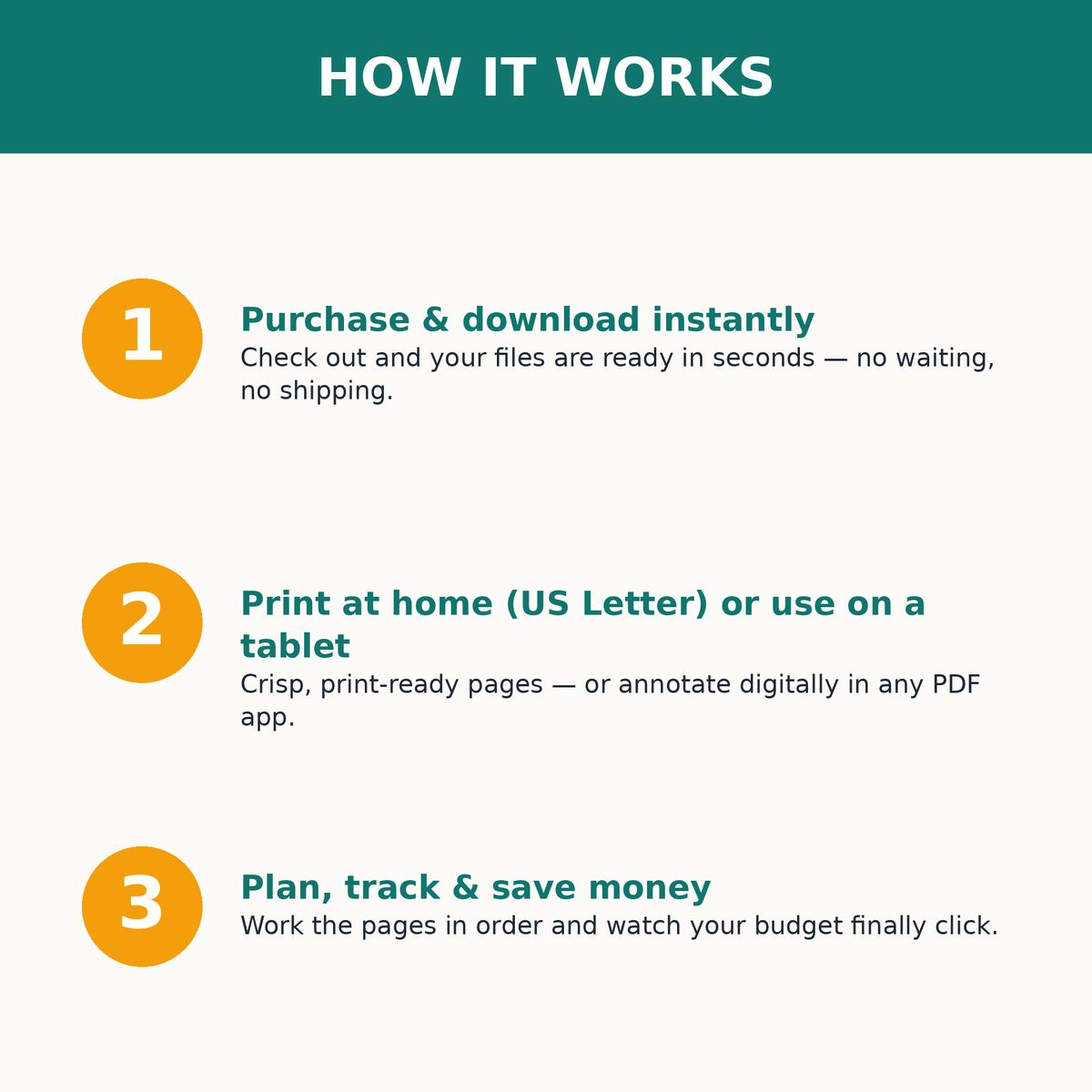
Fill in the income averaging worksheet with your recent months to find your real monthly figure.
Set your baseline survival budget, then start the buffer fund tracker and route surplus months into it.
Use the zero based budget each month, track invoices as you bill, and set aside quarterly taxes with the tax planner.
What buyers ask before downloading this planner.
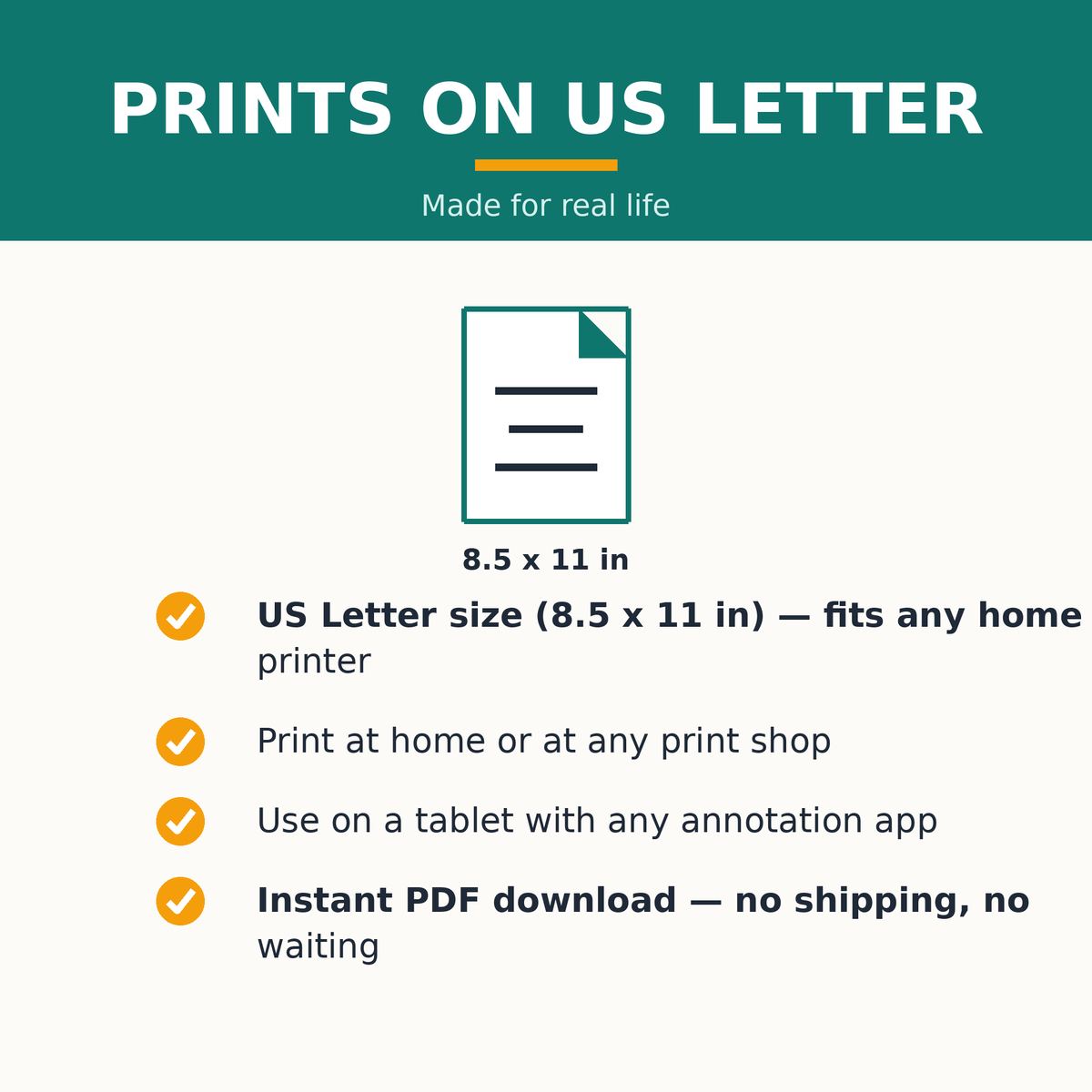
This is a spreadsheet based planner for budgeting variable income. The worksheets are designed to be worked through in order, from income averaging through the buffer fund tracker and quarterly tax planner.
Yes. The averaging worksheet includes guidance for estimating conservatively when you are new, and you refine the numbers as real months come in. The buffer fund method actually matters most in the early months when income is least predictable.
The buffer fund is working capital for normal income swings. It fills in good months and covers lean months as a matter of routine. An emergency fund is for true surprises like a broken car. This planner builds the buffer fund. You still want an emergency fund separately.
It helps you set aside a portion of each invoice for estimated taxes as the money comes in, and tracks what you have saved toward each quarterly payment. The goal is simple: April arrives and the money is already there.
No, it is undated. Start any month, use it for any twelve month stretch, and reuse the structure year after year as your freelance income evolves.
No. It is a budgeting and tracking tool, not tax or financial advice. For tax strategy and filing questions, talk to a qualified tax professional who understands freelance income.
Planners from the same collection, built to work together.
Save $1,378 in 2027, one weekly deposit at a time.

Turn saving into a game you'll actually finish.
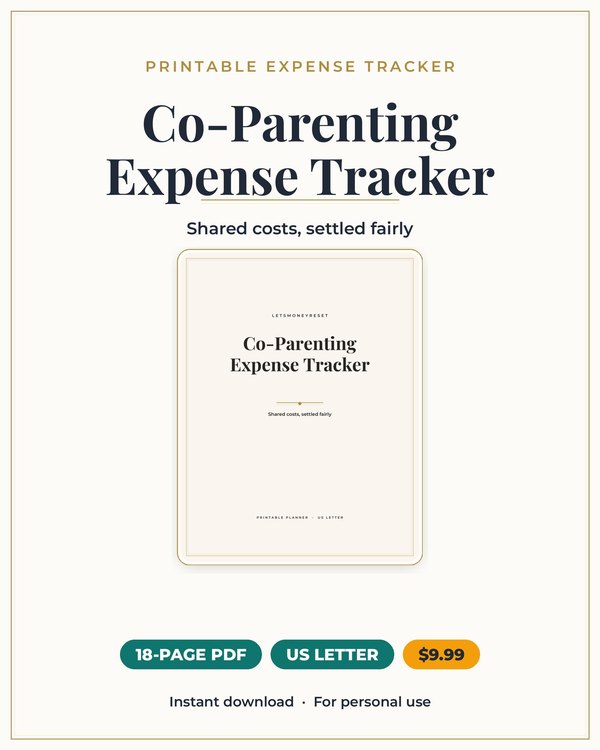
Split kid costs cleanly, with a record you can both trust.
Join the list and get the free monthly budget worksheet plus first word on new planners.
No spam, ever. Unsubscribe anytime.