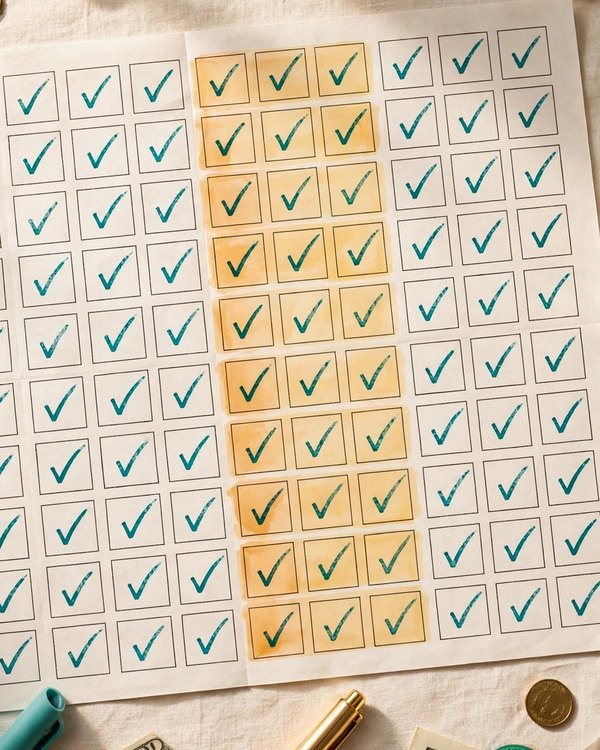
52 Week Money Challenge 2027 Printable
Save $1,378 in 2027, one weekly deposit at a time.
$1.50 $5.99
Buy on Etsy →

Budget Planners
Freelancer Budget Planner Printable
Freelance money does not arrive on a schedule. A great month gets followed by a silent one, invoices pay late, and the tax bill that employees never think about lands squarely on you four times a year. Budgeting built for steady paychecks collapses under this reality by March.
The freelance answer is not to budget harder. It is to budget differently: from the baseline instead of the peak, with taxes handled continuously instead of quarterly panicked, and with a buffer that turns feast and famine into something closer to a salary. This printable planner is built for exactly that.
This is a printable budget planner for irregular income, with variable income planning worksheets and a self employed tax tracker built for freelancers. It treats your income like what it is: variable, and plan around that instead of pretending otherwise.
The worksheets help you find your baseline monthly number, smooth lumpy payments into a steady personal budget, and assign every extra dollar from good months before it evaporates. The tax tracker keeps a running log of income and estimated tax set asides through the year, so quarterly payments are a transfer, not a crisis.
The variable income planning worksheets are the heart of it. You map your income patterns honestly, identify the baseline you can count on, and build the monthly budget from that number. Good months fund the buffer and the goals. The baseline covers life. This is how freelancers manufacture the steadiness that employees get for free.
The self employed tax tracker runs alongside everything. Each payment you receive gets logged with the tax percentage set aside, so your estimated quarterly payments accumulate visibly instead of ambushing you. Come tax time, the full year is already organized: income logged, set asides tracked, no shoebox, no panic.
Together the worksheets turn irregular income from a source of anxiety into a system you run.
Freelancers, contractors, and consultants with project based income. Gig workers whose weekly pay swings with demand. Creatives with royalty or commission income that arrives in waves. Anyone self employed who has ever looked at a great month and felt nervous instead of happy, because the tax bill and the lean month were both coming.
It is also for new freelancers leaving steady employment. The first year of variable income is disorienting, and a system built for it shortens the learning curve dramatically. And for seasoned independents who have been winging the taxes: the tracker alone is worth it.
Start by mapping three to six months of past income on the worksheets, honestly, including the bad months. Find your baseline: the monthly number you can reasonably count on. Build your essential budget from that number, not from your best month.
Set your tax percentage and apply it to every payment from day one. A separate account for tax money, even just a labeled envelope, makes this real. Each week, run a short money date: log new invoices and payments, update the worksheets, move the tax cut aside, and check your buffer.
In good months, fund the buffer first, then goals. In lean months, draw the buffer without guilt. That is what it is for. Over time the buffer grows and the anxiety shrinks, which is the entire point.
Freelance finances live in notebooks and receipts already: the invoice scribbled on a napkin, the mileage log, the quarterly estimate worksheet. A printable planner joins that world instead of fighting it.
The worksheets benefit from being spread out and marked up. Mapping income patterns on paper, with a pen, makes the baseline real in a way a spreadsheet tab does not. The tax tracker on your desk is a weekly reminder that beats any calendar alert.
Print fresh worksheets monthly and keep the tax tracker running all year. The system is undated, so it starts whenever your freelance life does.
Generic budget planners assume a paycheck. Every formula, every monthly sheet, every assumption breaks when income varies. This planner starts from variability as the core design constraint, not an edge case.
The tax tracker is the differentiator. Most budgeting tools ignore taxes entirely or treat them as someone elses problem. For the self employed, taxes are the budget. A planner that tracks them continuously is doing the job the others skip.
And the baseline method is genuinely different from just budgeting monthly. It is a system for manufacturing steadiness, which is the thing freelancers actually need.
Download the printable PDF instantly.
Map your variable income with the planning worksheets and set your baseline monthly budget.
Track income as it arrives, set aside taxes with every payment, and build the buffer that smooths the lean months.
What buyers ask before downloading this planner.
Yes. The variable income planning worksheets are built for exactly that: budgeting from your baseline instead of your best month, smoothing irregular pay into a steady monthly plan, and giving windfall months a job before lifestyle creep claims them.
The self employed tax tracker helps you log income through the year, estimate what you owe, and set aside tax money with every payment you receive. Quarterly estimated taxes stop being a surprise when you track them as you go. It is an organizer, not tax advice, so confirm specifics with a tax professional.
Budget your baseline monthly number for essentials, fund a buffer in good months, and assign every extra dollar a job with the worksheets. The goal is a personal salary you pay yourself, steady even when client payments are not.
Print the core worksheets monthly or use them in a tablet app. Many freelancers run a short money date each week: log new invoices, update the income tracker, move tax percentages aside, and check the buffer. The worksheets make that date quick and repeatable.
Yes. The irregular income planning works for any variable pay: gig work, commissions, seasonal work, contract roles. If your paychecks vary, the system fits.
Planners from the same collection, built to work together.
Save $1,378 in 2027, one weekly deposit at a time.

Turn saving into a game you'll actually finish.
Split kid costs cleanly, with a record you can both trust.
Join the list and get the free monthly budget worksheet plus first word on new planners.
No spam, ever. Unsubscribe anytime.