
52 Week Money Challenge 2027 Printable
Save $1,378 in 2027, one weekly deposit at a time.
$1.50 $5.99
Buy on Etsy →


Budget Planners
Never pay another late fee.
Late fees are a tax on disorganization. Not on being broke, on being disorganized. The bill was payable. The money was there. But the due date lived in an email you never opened, and now it is thirty five dollars for nothing.
Subscriptions are the quieter leak. The average household carries recurring charges it forgot about: the free trial that converted, the app replaced two phones ago, the service nobody uses. Individually they are small. Together they are a second utility bill you never agreed to.
This planner attacks both. It is a 20 page evergreen printable that organizes every bill and subscription in one place, with a subscription audit that pays for the planner in the first ten minutes.
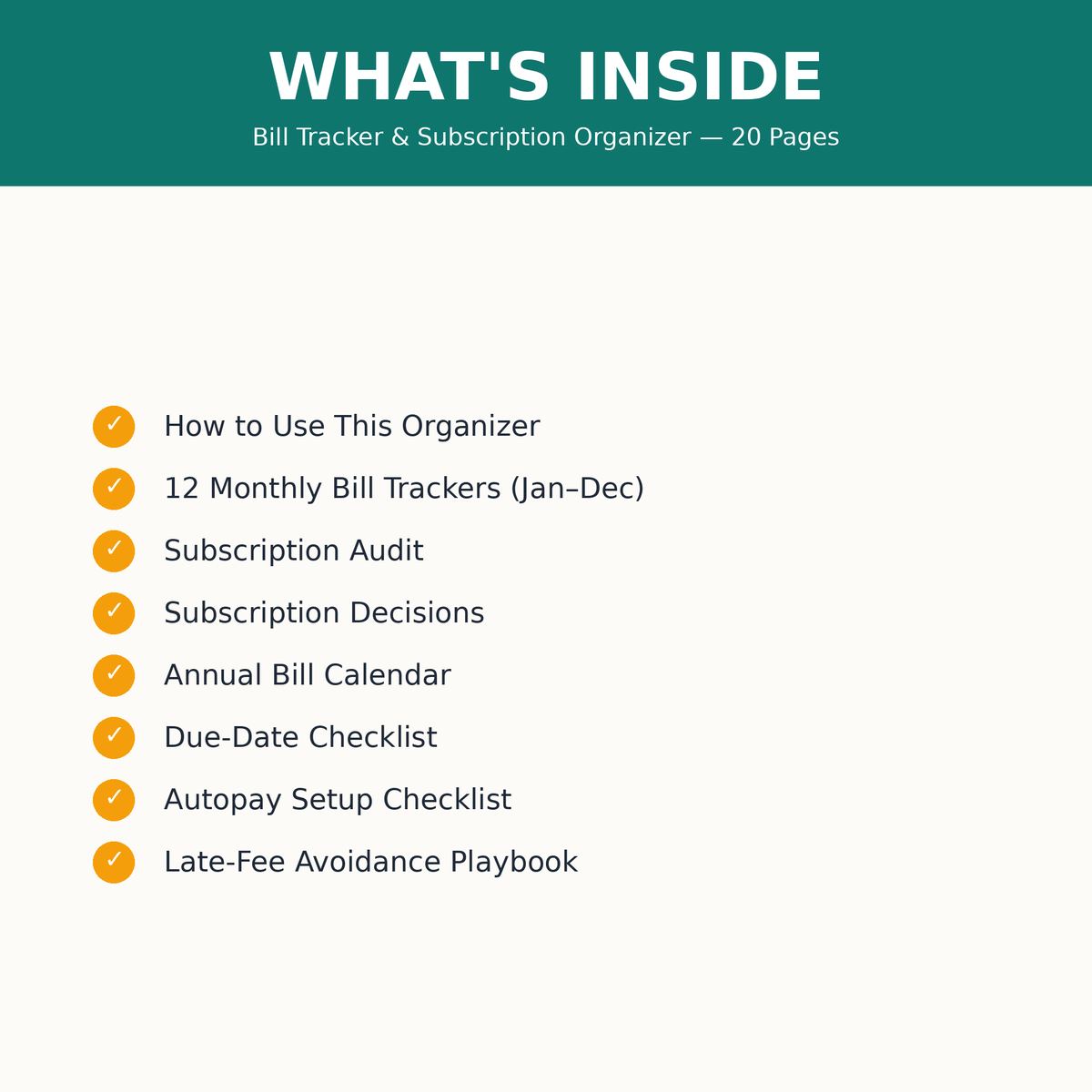
This is a monthly bill tracker printable and subscription organizer in one. It includes 12 monthly bill trackers with due dates and paid checkboxes, a two page subscription audit worksheet with cancellation log, an annual bill calendar, and a 10 tip late fee avoidance playbook.
It is evergreen: write in any year, start any month. Run the 10 minute subscription audit first, because most people find a charge to cancel immediately, and that instant win funds the whole system emotionally. Then settle into the monthly rhythm of tracking due dates and checking off paid bills.
Each monthly tracker lists your bills with amounts, due dates, and paid checkboxes, plus space for notes like confirmation numbers. The checkbox is small but mighty: the visual of unchecked boxes creates exactly the right pressure, and the checked column at month end is proof the system works.
The subscription audit worksheet is the standout. Page one lists every recurring charge: name, cost, frequency, and the honest question of whether you still use it. Page two is the cancellation log, where cuts get recorded with dates and confirmation numbers. The annual bill calendar maps every due date across the year so the expensive months never ambush you. And the late fee avoidance playbook distills ten practical moves, from autopay strategy to what to say when a fee hits anyway.
Anyone who has paid a late fee in the last year, which is most of us. Households juggling a dozen plus monthly bills across two partners. People who suspect they are paying for subscriptions they do not use but have never sat down to check.
It is especially good for the newly independent: first apartment, first set of utilities in your name, first time all the due dates are yours. And for couples merging finances, one shared tracker ends the I thought you paid that conversation permanently.
Week one, do the subscription audit. List every recurring charge you can find: bank statements, email receipts, app store subscriptions. Be ruthless on page one and record every cancellation on page two with confirmation numbers. Most people save real money in this single sitting.
Then set up the annual bill calendar with every due date you know, including the irregular ones. Each month, fill in the monthly tracker at the start: bills, amounts, due dates. Check them off as you pay. Glance at the playbook tips and pick two to implement, like aligning due dates or setting calendar alerts three days out.
The monthly routine takes about fifteen minutes. The audit takes ten minutes once. The savings compound all year.
Bills are paper adjacent already: statements, envelopes, confirmation numbers scribbled on the counter. A printable tracker lives in that world. Keep the current month on the fridge or by the desk and the checkboxes stay honest.
The subscription audit on paper, with a pen, has a satisfying ruthlessness. Crossing out a forgotten subscription by hand feels like a small victory, because it is one. And the annual calendar on the wall keeps due dates ambiently visible in a way no app does.
Evergreen means it never expires. Write in the year, use it for twelve months, reprint fresh next January.
Bill apps want your bank login and show you ads for credit cards. This planner wants fifteen minutes a month and gives you the audit those apps never push you to do. Nobody profits from your subscriptions except the subscription companies, and this planner is on your side.
The cancellation log is the detail most trackers skip. Canceling is only half the job. Recording the confirmation number is what protects you when the charge mysteriously continues. This planner treats that as a first class step.
And the late fee playbook is genuinely practical, not generic advice. Ten specific moves, written for real life, in the same package as the trackers that make them work.
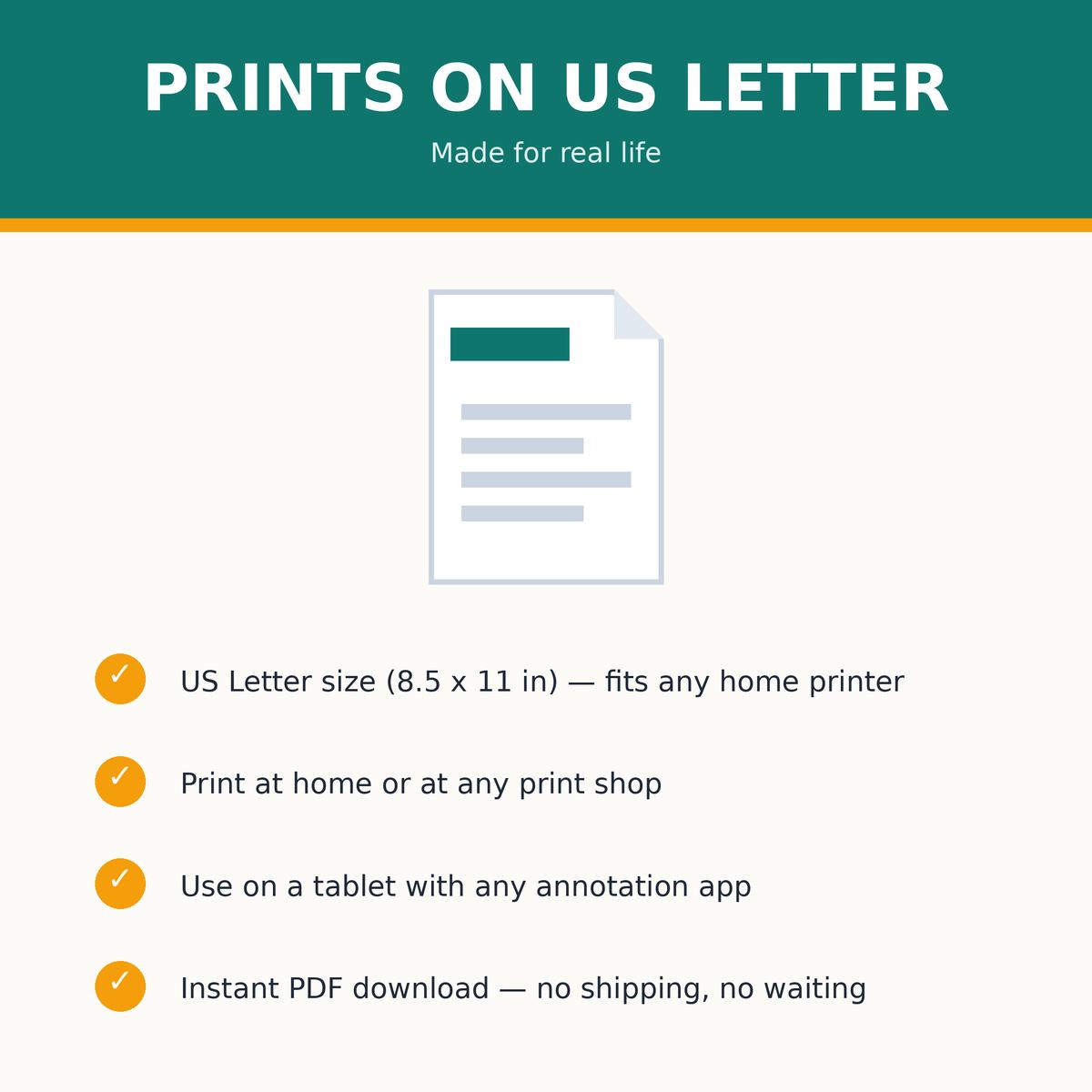
Download the 20 page evergreen printable instantly and write in any year.
List every bill and subscription, then run the 10 minute subscription audit and cancel what you do not use.
Track due dates and paid checkboxes monthly, and keep the annual bill calendar where you can see it.
What buyers ask before downloading this planner.
Twelve monthly bill trackers, each with due dates and paid checkboxes. The planner is evergreen and undated, so you write in any year and start any month. Reprint the monthly pages each year.
The two page subscription audit worksheet lists every recurring charge with its cost and frequency, then the cancellation log tracks what you cut. Most people find at least one charge to cancel in the first ten minutes, often one they forgot they had.
The 10 tip late fee avoidance playbook covers the practical moves: autopay strategy, calendar alerts, due date alignment, and what to do when a late fee hits anyway. Combined with the due date tracking, late fees become rare instead of routine.
The annual bill calendar shows the whole year of due dates in one view, which is how you spot the brutal months before they arrive. The 12 month due date grid in the paycheck planner is similar, but this planner goes deeper on subscriptions and the audit.
Yes. The monthly trackers have space for irregular bills alongside the regulars, and the annual calendar keeps them visible. Property tax, annual insurance, quarterly estimates: they stop being surprises.
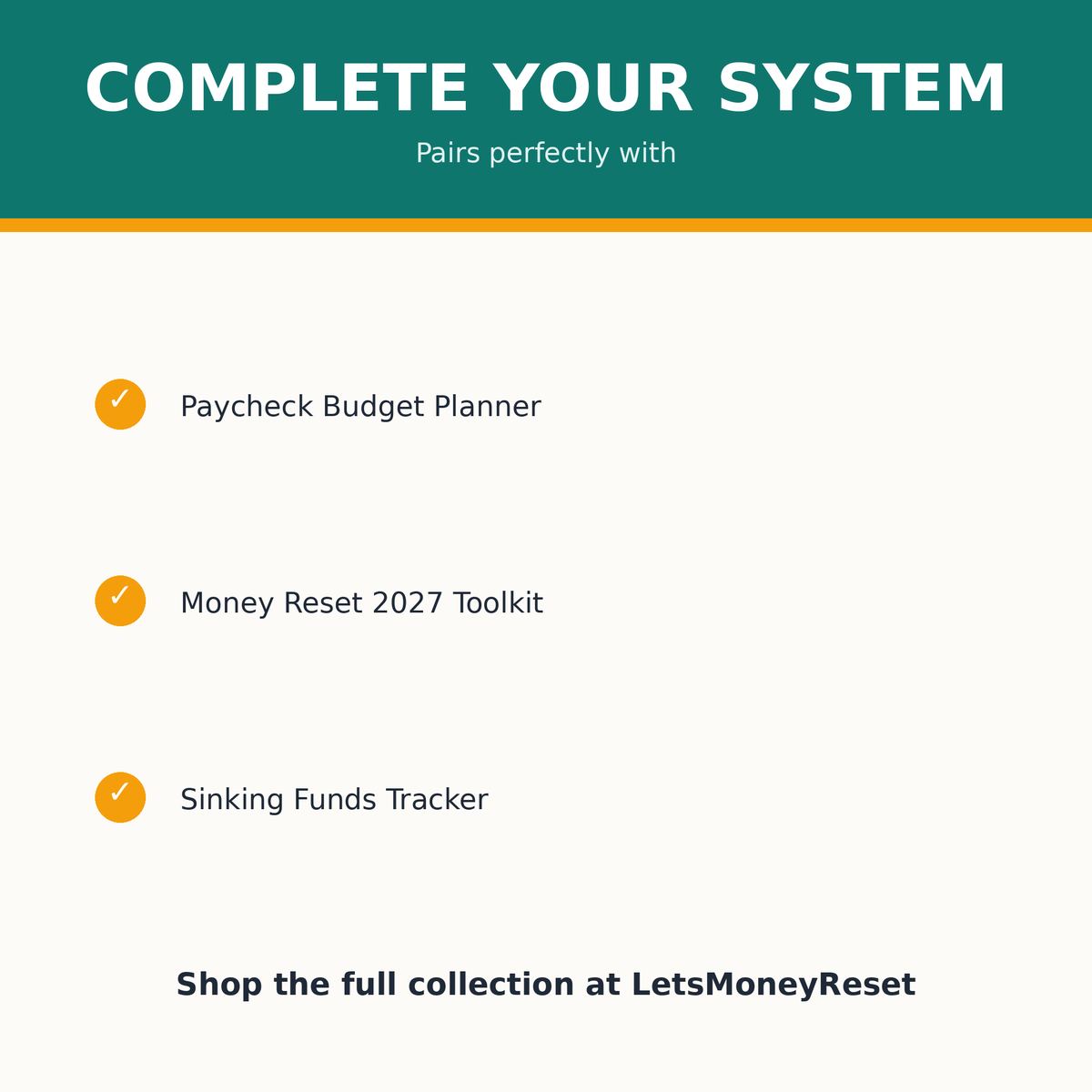
Planners from the same collection, built to work together.
Save $1,378 in 2027, one weekly deposit at a time.

Turn saving into a game you'll actually finish.
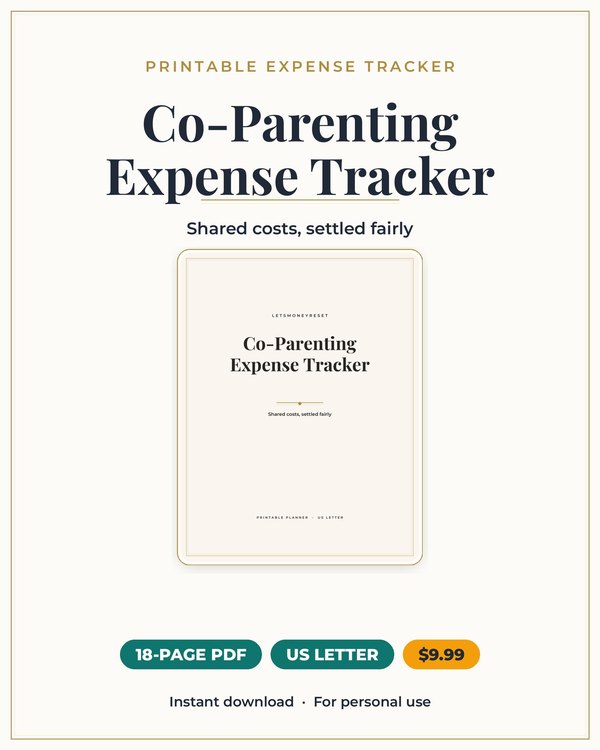
Split kid costs cleanly, with a record you can both trust.
Join the list and get the free monthly budget worksheet plus first word on new planners.
No spam, ever. Unsubscribe anytime.