
52 Week Money Challenge 2027 Printable
Save $1,378 in 2027, one weekly deposit at a time.
$1.50 $5.99
Buy on Etsy →
Budget Planners
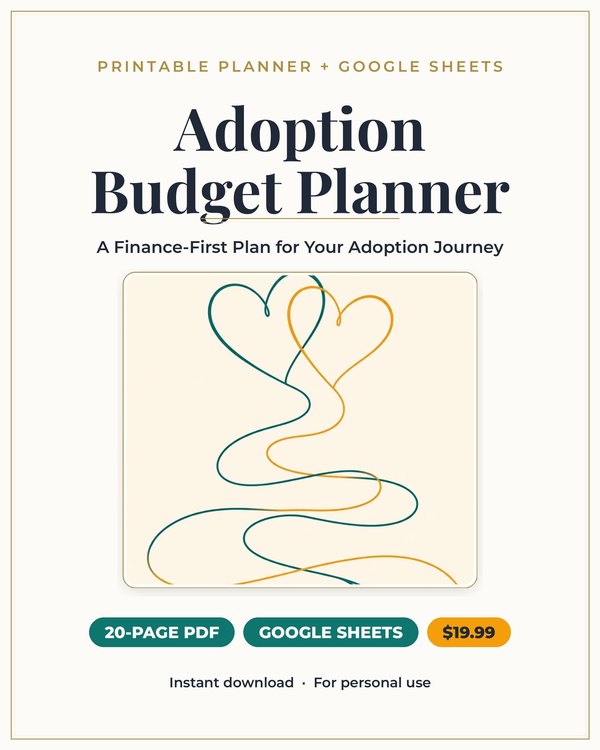
Map every adoption cost before you commit to the path.
Adoption costs arrive from a dozen directions at once. Agency fees, home study bills, legal fees, travel, birth parent expenses, post placement visits: each one is manageable on its own, and together they form a number that can stop a family before they start.
The problem is not just the total. It is the fog. Costs surface at different stages, different paths have wildly different price tags, and nobody hands you a single sheet that shows the whole picture. This planner is that sheet, expanded into a full system. It pulls every adoption cost into one calm, organized place so you can choose your path with open eyes.
This is a 20 page US Letter planner built to map every adoption cost before you commit to the path. It starts with an adoption cost overview that captures the full picture, then breaks it into trackable pieces: a fee milestone tracker, per agency cost comparison, home study budget, legal fees tracker, travel costs, adoption tax credit tracker, monthly savings plan, and a fundraising and contributions log.
It also includes a Google Sheets companion with auto calculating totals, so the math stays right even as numbers change. The printable is for thinking and deciding. The spreadsheet is for calculating. Together they cover the whole financial journey of an adoption.
The adoption cost overview is the foundation: every major cost category in one view, so the total stops being a rumor and becomes a number. The per agency cost comparison lets you line up agencies or entire paths, domestic infant, foster to adopt, international, side by side with their real fee schedules.
The fee milestone tracker follows payments as they come due through the process, because adoption bills arrive in stages and missing one can stall everything. The home study budget and legal fees tracker cover two of the biggest line items in detail. Travel costs get their own page, since many paths involve significant travel. The adoption tax credit tracker organizes qualifying expenses for tax time, and the monthly savings plan plus fundraising log turn the total into an achievable month by month path.
Families at the very beginning, choosing between paths and needing real numbers before they commit. The comparison pages were made for this exact moment, when every option feels both exciting and financially opaque.
Families already matched and moving through the process, who need the milestone tracker to stay ahead of staged payments. Single parents adopting, who are managing the entire financial picture solo and need it all in one place. And families fundraising part of the total, who need the contributions log to stay organized and grateful instead of overwhelmed.
Start with the cost overview, using real quotes wherever you can get them. Call agencies, ask for fee schedules in writing, and put the numbers in the planner instead of keeping them in your head. Then run the per agency comparison before you sign anything. This is the page that prevents expensive surprises.
As the process moves, log each fee in the milestone tracker the week it comes due. Keep the home study and legal pages current as bills arrive. Update the monthly savings plan whenever your timeline shifts, and log every fundraising contribution the day it comes in. At tax time, the tax credit tracker is already organized.
Revisit the overview quarterly. Adoption timelines move, and a planner you revisit stays honest.
The Google Sheets companion does the calculating: totals that update themselves, comparisons that stay accurate, a savings plan that adjusts. If you have ever tried to keep adoption math in your head or in a notes app, you know how fast it goes wrong.
The printable does the deciding. Choosing an agency, committing to a path, setting a savings target: these are not spreadsheet moments. They are sit down with a pen moments. The planner gives those decisions a structured, calm space.
You get both because the journey needs both. Numbers you can trust and thinking you can see.
Most budget planners treat adoption as just another expense category. It is not. It is a multi stage, multi vendor, emotionally loaded financial project with tax implications and a timeline you do not fully control. A generic planner cannot hold that.
This planner follows the actual shape of an adoption: choosing the path, paying in stages, traveling, tracking the credit, and funding the gap. Every page maps to a real phase of the journey.
And it respects what the money means. This is not about optimizing spending. It is about making a deeply wanted family financially possible, with clarity instead of fear.
Download the 20 page printable and open the Google Sheets companion with auto calculating totals.
Fill in the adoption cost overview with real quotes, then compare agencies side by side.
Track fee milestones, home study bills, legal fees, and travel as they happen, and log savings and fundraising monthly.
What buyers ask before downloading this planner.
Domestic infant adoption typically runs into the tens of thousands, foster to adopt can be very low cost, and international adoption varies widely by country. The planner does not assume a number. The cost overview and per agency comparison pages exist so you can map your specific path with real quotes, not averages from the internet.
Yes. The per agency cost comparison page is built for exactly this: line up agencies or paths side by side with their fee schedules, so you are comparing real numbers instead of brochure language. It is one of the most valuable pages in the planner.
The Google Sheets companion handles the math with auto calculating totals. The 20 page printable handles the thinking: comparisons, timelines, fee milestones, and the fundraising log. Most families use both, the sheets for numbers and the planner for decisions.
The adoption tax credit tracker logs qualifying expenses and timing through the process. Tax rules change, so treat it as an organizer and confirm the current credit with a tax professional. But having every expense already categorized will make that conversation much easier.
The monthly savings plan breaks the total into monthly targets based on your timeline. The fundraising and contributions log tracks every gift and fundraiser so you always know what came in and what it covered. Together they turn an overwhelming total into a month by month path.
Planners from the same collection, built to work together.
Save $1,378 in 2027, one weekly deposit at a time.

Turn saving into a game you'll actually finish.
Split kid costs cleanly, with a record you can both trust.
Join the list and get the free monthly budget worksheet plus first word on new planners.
No spam, ever. Unsubscribe anytime.