Sunday Scaries Reset Kit
Beat Sunday night dread and rest before the work week.
$2.50 $9.99
Buy on Etsy →
Focus and Mind
A low overwhelm money system designed for ADHD brains.
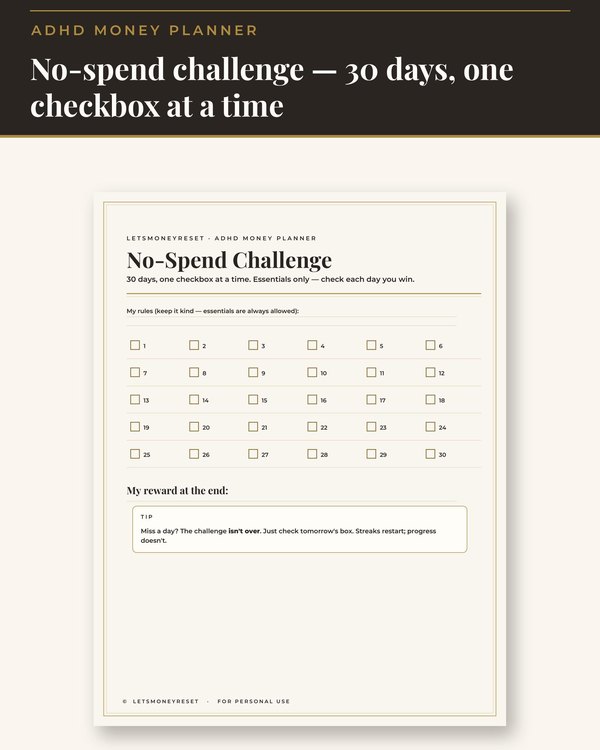
If traditional budgets feel like walls of tiny boxes and guilt, this 15 page planner is the opposite. It was designed for ADHD brains from the first page: one idea per page, generous whitespace, big checkboxes, tiny 5 minute steps, and visual trackers like progress bars and status circles instead of dense grids. Nothing here assumes you can sit still for an hour and love spreadsheets.
This is not a regular budget with an ADHD label on it. Every page was rebuilt around how ADHD brains actually work: low friction starts, visible progress, and zero shame when life happens. The goal is not a perfect budget. The goal is a money system you will actually open.
Traditional budgets demand the exact skills ADHD makes hardest: sustained attention, working memory, and tolerance for boring repetitive tasks. A 40 line spreadsheet is not a plan for an ADHD brain. It is a trap. You fill it in once, feel good for a day, and never open it again.
Then the guilt cycle starts. The budget becomes another thing you failed at, which makes you avoid money altogether, which makes the money situation worse. This planner breaks that cycle by design. Small steps you can finish. Pages you can complete in five minutes. Progress you can see. When the system fits your brain, sticking with it stops being a willpower problem.
ADHD brains respond to visual feedback. A number in a cell does nothing; a progress bar filling up feels like winning. That is why this planner swaps grids for visuals wherever it can. The visual bill tracker shows your bills as statuses you can see at a glance. The visual debt payoff page turns balances into bars that shrink. Savings goal cards give each goal its own satisfying visual.
The big checkboxes matter too. Checking a big box is a small dopamine hit, and dopamine is the currency of the ADHD brain. The planner is full of them on purpose. Every completed step gives your brain the reward it needs to come back tomorrow.
Impulse spending is the ADHD money killer, and willpower is not the fix. The impulse spending log treats urges as data instead of failures. When you buy something on impulse, you log what it was, what triggered it, and how you felt after. Over time the log reveals your patterns: the boredom buys, the stress buys, the late night phone scroll buys.
The Before I Buy 24 hour checklist is the other half. Before a non essential purchase, you run the checklist and wait a day. Most urges do not survive 24 hours. The ones that do are usually things you actually want, and then you buy them without guilt. The weekly 5 minute money check in keeps the whole system honest with almost no effort.
This planner is for adults with ADHD who want a calmer relationship with money, whether diagnosed or self identified. It is for the person who has downloaded six budgeting apps and abandoned all of them. It is for the person whose bills are paid but only after three reminder emails and a late fee.
It is also for people who do not have ADHD but share the traits: overwhelm at dense paperwork, avoidance of money tasks, a brain that needs things visual and quick. If traditional budgets have never stuck for you for any reason, this approach might be the one that does.
Start with the money brain dump. Get every money worry out of your head and onto the page. Then run the subscription audit, because most people find at least one charge to cancel in the first ten minutes and that instant win builds momentum.
After that, the routine is the weekly 5 minute money check in: glance at the visual bill tracker, log any impulse buys, check your savings cards. Five minutes, once a week, and the system stays alive. On months when even that feels like too much, the 30 day no spend challenge grid gives you one simple game to play instead.
Download and print the planner. Start with the money brain dump and the subscription audit.
Use the impulse log and the Before I Buy checklist in daily life, and run the 5 minute check in once a week.
Watch the visual trackers fill up and reprint the pages you use most as the months go on.
What buyers ask before downloading this planner.
No. It was designed around ADHD brains from the first page: one idea per page, big checkboxes, 5 minute steps, and visual trackers instead of dense grids. The structure is different because the brain using it is different.
No. If traditional budgets have never stuck for you, for any reason, this planner was built for you.
That pattern is exactly what this planner is designed for. The steps are tiny, the pages are visual, and the weekly check in takes five minutes. It assumes low follow through and works anyway.
It is a printable PDF. Many people with ADHD do better with paper they can see and touch. You can also import it into a tablet annotation app and use a stylus.
No planner fixes anything on its own. What this one does is give you tools that work with your brain instead of against it: the impulse log for awareness and the 24 hour checklist for a pause. Used consistently, most people see their patterns change.
The weekly check in and trackers work in any order, so you can start any week of the year without wasting pages.
Planners from the same collection, built to work together.
Beat Sunday night dread and rest before the work week.
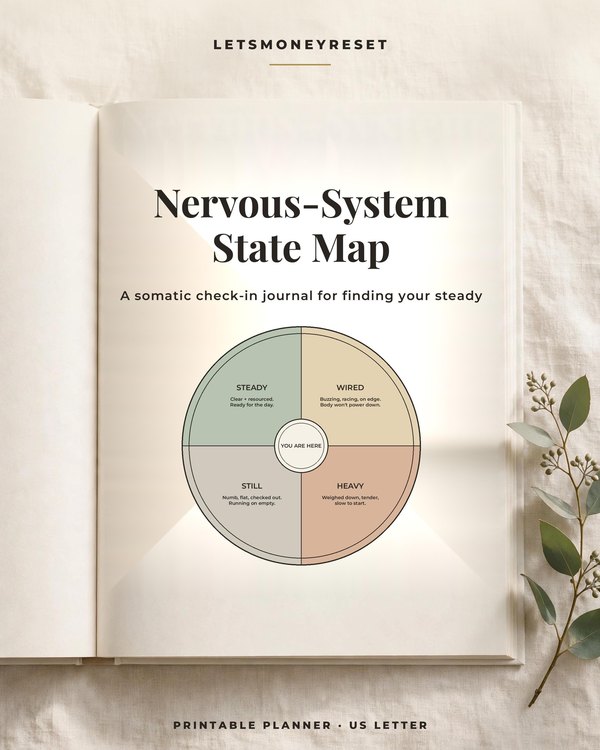
Notice how you feel, and choose what helps.
Small, sturdy tools for the moment you need them.
Join the list and get the free monthly budget worksheet plus first word on new planners.
No spam, ever. Unsubscribe anytime.