
Two Week Wait Planner
Structure and support for the hardest two weeks of trying.
$2.50 $9.99
Buy on Etsy →
Family and Kids
Stay organized and prepared at every step of the 504 process.
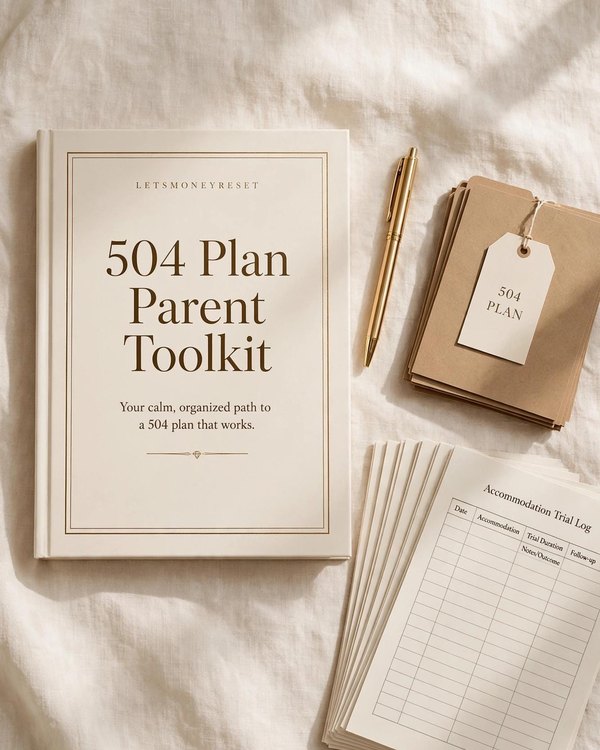
The 504 process has a lot of steps and most of them happen in writing. You request an evaluation in writing, you attend a meeting with a team of school staff, you agree on accommodations, and then you review everything every year. This 54 page printable toolkit walks you through each of those steps in order, with the exact pages you need at each stage.
It starts before the process does. You get a plain language overview of 504 versus IEP, your rights as a parent, and a glossary that translates school terms into normal words. From there it moves through the evaluation request, the meeting itself, choosing accommodations, tracking how they work, and the yearly review.
The toolkit opens with the evaluation request letter template, so your first step is a letter you can adapt rather than a blank page. Then come the accommodation idea banks, organized so you can see what is commonly offered, plus a choosing worksheet that helps you match accommodations to your child's actual needs instead of accepting a generic list.
For the meeting itself you get prep pages, a suggested agenda, a question bank of things parents often forget to ask, and notes pages to capture what the team agrees to. After the meeting, blank trial logs let you track whether each accommodation is actually being used, and the annual review, semester check, and yearly fidelity pages carry you through the years after.
This is for parents at any stage of the 504 process. If you are just starting and wondering whether to request an evaluation, the overview and letter template get you moving. If your meeting is next week, the prep pages and question bank are the part you need tonight.
It is also built for the long haul. The pages are blank and reusable year after year, so when the annual review comes around you are not starting from scratch. Parents of kids with ADHD, anxiety, diabetes, asthma, and other conditions that affect school life use 504 plans to get accommodations like extra time, seating changes, or modified assignments.
Start with the 504 versus IEP overview and the glossary so you walk in understanding the terms the school will use. Then adapt the evaluation request letter and send it. While you wait for the meeting date, work through the accommodation idea banks and the choosing worksheet so you arrive with a clear picture of what your child needs.
At the meeting, use the agenda and question bank to keep the conversation on track, and take notes on what is agreed. Afterward, use the trial logs for the first weeks to record what is actually happening in the classroom. Bring those logs to the semester check and the annual review, where they turn vague impressions into documented history.
The school keeps its own records, but those records serve the school's process. Your own notes serve your child. When you can show a trial log of which accommodations were used and which were skipped, the review meeting becomes a conversation about evidence instead of memory.
Preparation also changes the tone of the meeting. Teams respond to parents who arrive organized. A parent with a question bank and a choosing worksheet already filled in is not asking for favors. They are participating as an equal member of the team, which is exactly what the law intends.
Download the 54 page PDF and print the sections you need now. Start with the overview, glossary, and evaluation request letter.
Work through the accommodation idea banks and choosing worksheet while you wait for your meeting date.
Bring the meeting prep pages and question bank to the meeting, then use the trial logs and review pages to track everything through the school year.
What buyers ask before downloading this planner.
Both provide school supports, but they come from different laws and cover different needs. A 504 plan provides accommodations that give a child equal access to learning, while an IEP provides specialized instruction for kids who qualify under special education law. The toolkit includes a full overview so you can see which one fits your situation.
No. Any parent can request an evaluation in writing, and the toolkit includes a letter template for exactly that. Most families go through the whole process without a lawyer. The template and prep pages are there so your request is clear and complete.
Yes, that is the point of the blank pages. Print fresh trial logs each semester and fresh review pages each year. One download covers your child for as many years as the plan is in place.
That is common. Schools do not always tell parents this option exists. The evaluation request letter in the toolkit is how you start the conversation yourself, in writing, which creates a paper trail from day one.
It is 54 printable pages covering the full process from evaluation request through the meeting, accommodations, trial tracking, and yearly reviews. You print only the sections you need at each stage.
No. It is an organizational toolkit that helps you prepare, document, and track the process. It explains your rights in plain language but it is not legal advice, and for specific legal questions you should talk to an education advocate or attorney in your state.
Planners from the same collection, built to work together.
Structure and support for the hardest two weeks of trying.

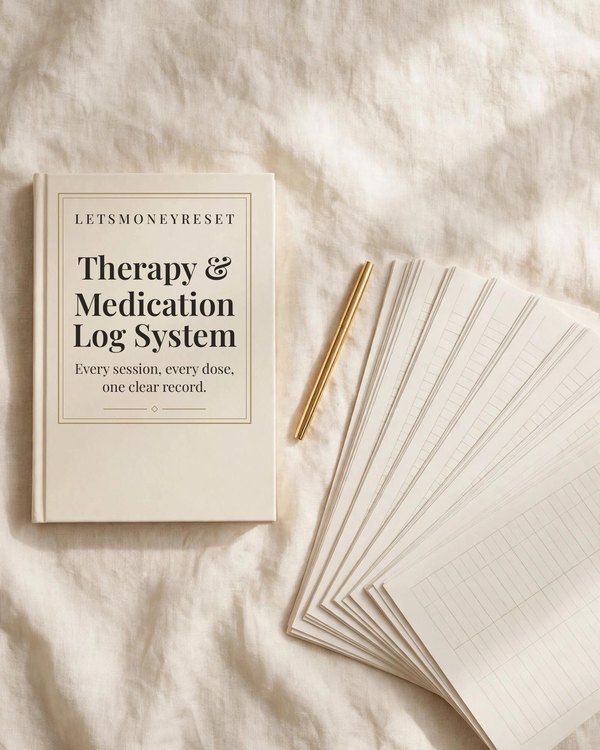
Log your child's therapy sessions and medications side by side.
Join the list and get the free monthly budget worksheet plus first word on new planners.
No spam, ever. Unsubscribe anytime.